Chinese Cooking Class Singapore: Wok Skills from Gong Bao to Stir-Fry
 D'Open Kitchen · 19 Sep 2026 · 8 min read
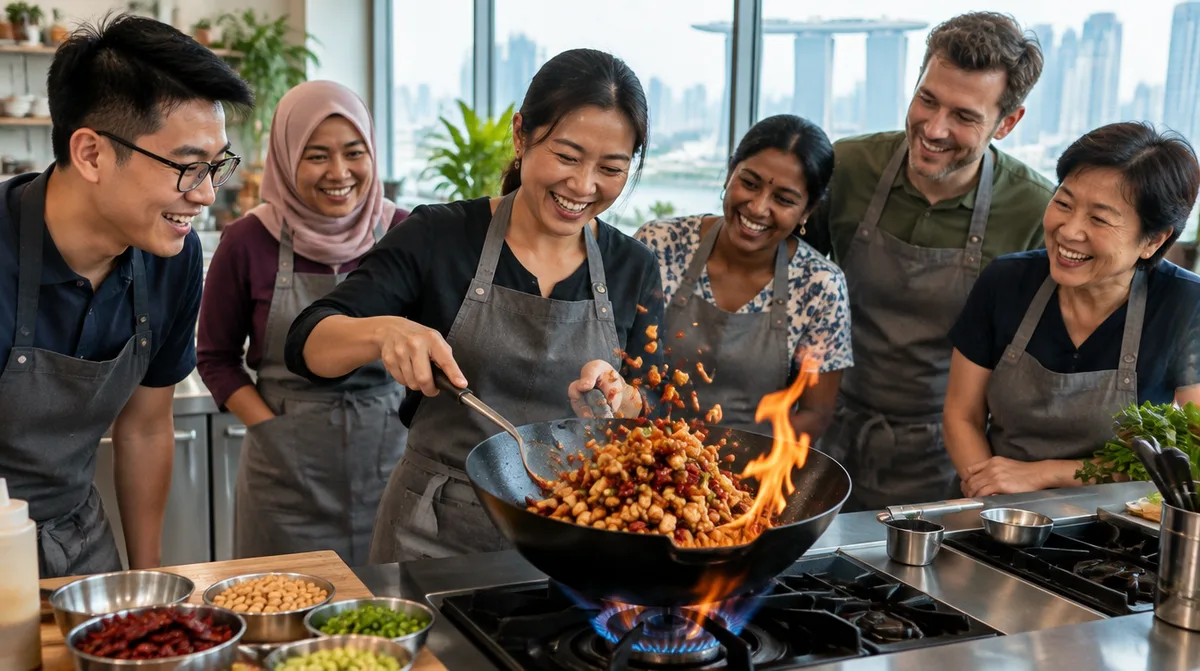
Most of us in Singapore have grown up eating wok-fried food. Char kway teow at the hawker centre, gong bao chicken at the zi char stall, a quick stir fry at home on a weeknight. Yet ask a room of people to actually cook one from scratch and most will admit the results at home never taste like the ones outside. A chinese cooking class singapore session is where that gap finally closes, and it is more fun than it sounds.
This guide walks through what you really learn at the wok, why gong bao chicken is such a good teaching dish, how a session runs at our Raffles Place studio, and the practical details to check before you book for your team or your celebration.
Why the wok is worth learning properly
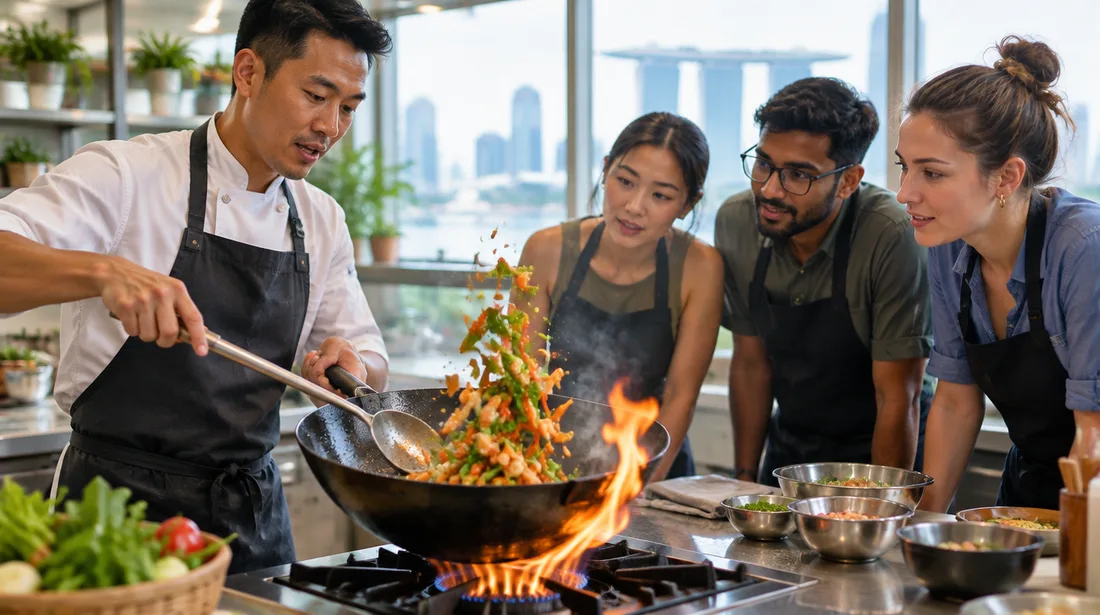
The wok is not just a big pan. Its shape concentrates heat at the base and leaves cooler sides where food can rest, so a good cook is constantly moving ingredients between the two. That is why restaurant stir fries have a smoky depth, often called wok hei, that a flat pan at home rarely produces.
Learning to control that heat is the whole game. Get the pan hot enough, keep the ingredients moving, add things in the right order, and a plate comes together in minutes. Get it wrong and you end up steaming instead of frying. A wok cooking class teaches the difference in a single afternoon, and once you feel it you do not forget it.
There is also a quiet satisfaction in the pace. Stir-frying is quick, loud and a little dramatic. Flames lick the side of the pan, the sauce hits and hisses, and thirty seconds later dinner is done. For a group, that energy is contagious.
Gong bao chicken: the perfect dish to learn on
If you only master one wok dish, gong bao chicken (also spelled kung pao) is a strong choice. It packs almost every core technique into one plate, which is why it anchors so many of our Chinese cooking class sessions.
Here is what a gong bao chicken class actually teaches, step by step:
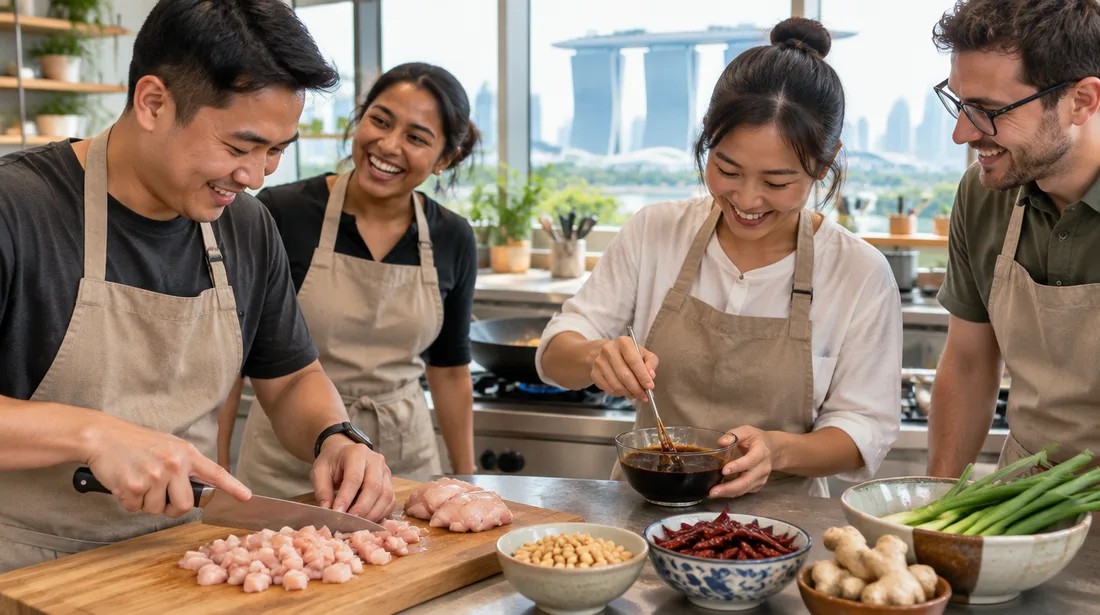
- Knife work. Cutting chicken into even cubes so every piece cooks at the same rate, and slicing aromatics fine enough to release flavour fast.
- Velveting. A light coating of cornstarch, seasoning and a little oil that keeps the chicken silky and tender over fierce heat. This one trick transforms home stir fries.
- Building the sauce. Balancing soy, vinegar, a touch of sugar and stock into a glossy sauce that clings to the chicken rather than pooling on the plate.
- Aromatics and dried chillies. Toasting dried chillies and Sichuan peppercorns in oil just long enough to perfume it without burning, then adding ginger, garlic and spring onion.
- The stir fry itself. Chicken in first, moving constantly, then sauce, then peanuts at the end for crunch. It is over in a couple of minutes, which is exactly why timing matters.
Once your group has cooked gong bao chicken, every other Chinese stir fry class feels approachable. The same rhythm applies to beef with ginger and spring onion, prawns with garlic, or a simple vegetable stir fry with a little sauce.
What a Chinese cooking class Singapore session looks like
A Chinese cooking class at D’Open Kitchen follows a rhythm that has been refined over 12 years of hosting groups.
Welcome and briefing. Your group arrives at 18 Robinson Road, directly outside Raffles Place MRT, and settles in at prepped stations. The chef walks through the dishes for the day and the techniques you will be practising.
Demonstration. Before anyone touches a wok, the chef cooks the dish in front of the group, calling out what to look, listen and smell for. This is where most of the “so that is why mine never worked” moments happen.
Hands on at the stove. Now it is your turn. Groups prep, mix sauces and take their place at the wok. The chef and facilitators move between stations, adjusting flames and catching mistakes before they become dinner.
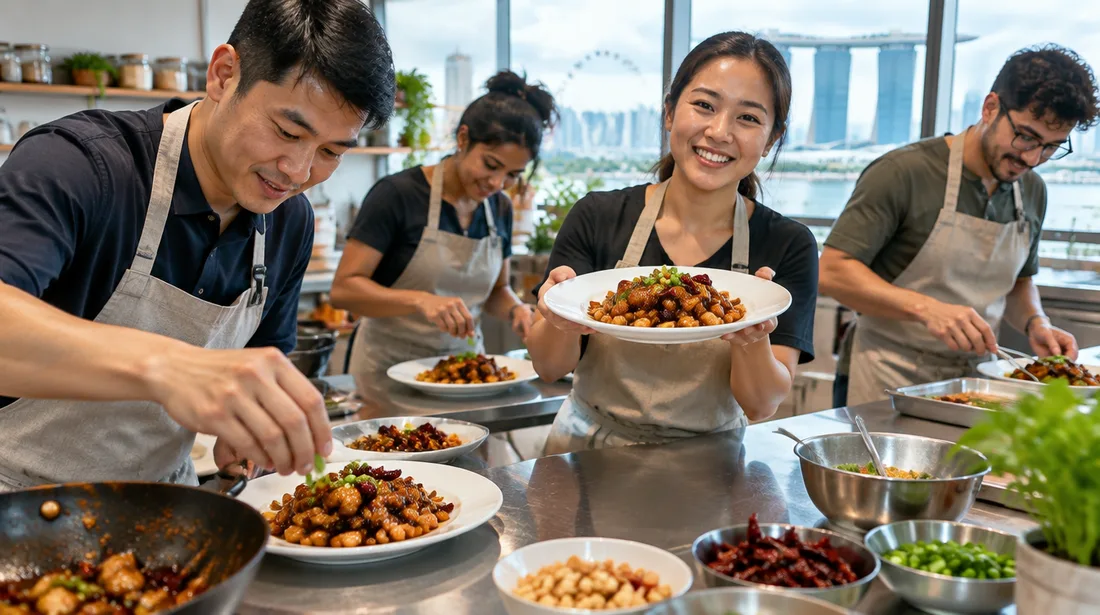
Plate, eat and compare. Everyone plates their dish and sits down to eat together. If you have chosen a competition format, the chef tastes and judges each team’s plate, which always gets a room talking.
The whole thing typically runs two to three hours, and we handle planning, ingredients, facilitation and cleanup. Nobody in your group has to shop, prep or wash a single wok.
Who a Chinese stir fry class suits
We run these sessions for a wide mix of groups, and the wok has a way of levelling the field.
Corporate teams. Stir-frying is fast and slightly chaotic, which makes it a genuinely good test of communication. Someone has to prep, someone has to watch the sauce, someone has to call the timing at the pan. Run as a friendly competition, a cooking team building session built around the wok gives colleagues a shared win and a story to retell at the office.
Halal groups. This is a big one for Chinese food, where pork and lard often sneak into dishes. At D’Open Kitchen every dish uses strictly halal-sourced ingredients as standard, so a halal team building session can include gong bao chicken, beef stir fries and seafood without anyone needing to sit out or ask questions about the kitchen.
Private celebrations. Birthdays, family gatherings, a group of friends who have always wanted to learn. A wok class as a private event feels relaxed and hands on, and everyone leaves with a dish they can actually make again at home.
Culture seekers. Visitors and newer residents who want to understand the food they have been eating. Pair it with our heritage cooking class or read our guide to a local cooking class in Singapore if you want the broader Singapore story.
Good to know before you book
A few practical points that come up in almost every enquiry:
- Session length. Typically two to three hours, from briefing to the last mouthful.
- Experience level. None needed. Everything is demonstrated first and every station is prepped.
- Halal. All ingredients are strictly halal-sourced, so the entire group can take part and eat together.
- Location. 18 Robinson Road, #03-02, Singapore 048547, directly outside Raffles Place MRT (Exit F/G). Easy for teams coming from the CBD after work.
- Group size and format. Tell us your headcount and whether you would like a relaxed class or a competition format, and we will plan around it.
- Fully managed. Planning, ingredients, facilitation and cleanup are all handled by us.
If your group would prefer dumplings and steamed dishes over the wok, have a look at our dim sum cooking class guide as well. Many teams pair the two across separate sessions.
Tips to get the most out of the wok
Groups that arrive with a few things in mind tend to cook better and enjoy it more.
- Prep everything before the flame goes on. Stir-frying leaves no time to chop mid-cook. Have every ingredient cut, measured and within reach.
- Do not overcrowd the pan. Too much food drops the temperature and you end up boiling. Cook in batches if the chef tells you to.
- Keep it moving. The food should never sit still on the hot base for long. Toss, push, fold.
- Taste the sauce before it goes in. Balance it in the bowl, because there is no fixing it once it hits the wok.
- Listen. A good stir fry sounds like a steady sizzle. Silence means the pan is too cool, and a violent crackle means it is too hot for what you have added.
The best part of a Chinese cooking class is how quickly these ideas stick. People who have been cooking mediocre stir fries for years walk out with a completely different feel for the pan.
Ready to cook?
Whether it is a team of eight or a company of eighty, a group of friends or a family celebration, a Chinese cooking class at D’Open Kitchen gives everyone a wok, a plate of gong bao chicken they made themselves and a much better understanding of the food we all grew up eating. We have hosted more than 40,000 guests over the years, and the wok sessions remain some of the loudest and happiest in the studio.
Tell us your date, your headcount and the kind of group you are bringing, and we will put together a session that fits. Get in touch for a quote or call us at +65 8901 2697.
Planning a corporate team-building activity? See our cooking team building experiences in Singapore, or explore corporate team building and team building dinners →
Want your team or guests to master the wok together? Tell us your date and headcount
Halal-friendly, fully managed, and directly outside Raffles Place MRT (Exit F/G).
Get a quoteFrequently asked questions
What do you learn in a Chinese cooking class?
You learn the core wok techniques behind Chinese home cooking: cutting ingredients to cook evenly, velveting meat so it stays tender, building a sauce that clings, and stir-frying over high heat without steaming everything. A gong bao chicken class is a popular way to practise all of these in one dish.
Is a wok cooking class suitable for beginners?
Yes. The chef demonstrates each step before your group cooks, every station is stocked and prepped, and no cooking experience is needed. Stir-frying is fast, so beginners see results within minutes rather than hours.
Is the Chinese cooking class halal?
Yes. Every dish at D'Open Kitchen uses strictly halal-sourced ingredients as standard, so classic wok dishes are made with halal chicken, beef, seafood or vegetables, and the whole group can cook and eat together.
How long does a Chinese stir fry class take?
Sessions typically run two to three hours. That covers the briefing, prep and knife work, sauce building, wok time at the stove, and sitting down to eat what you made.
Can a Chinese cooking class work as a team building activity?
Very well. Stir-frying rewards timing and communication, so it suits a team format where groups share stations, divide up prep and race the clock. Ask us about running it as a friendly competition with the chef judging the plates.