Local Cooking Class Singapore: Heritage on a Plate
 D'Open Kitchen · 24 Jul 2026 · 6 min read
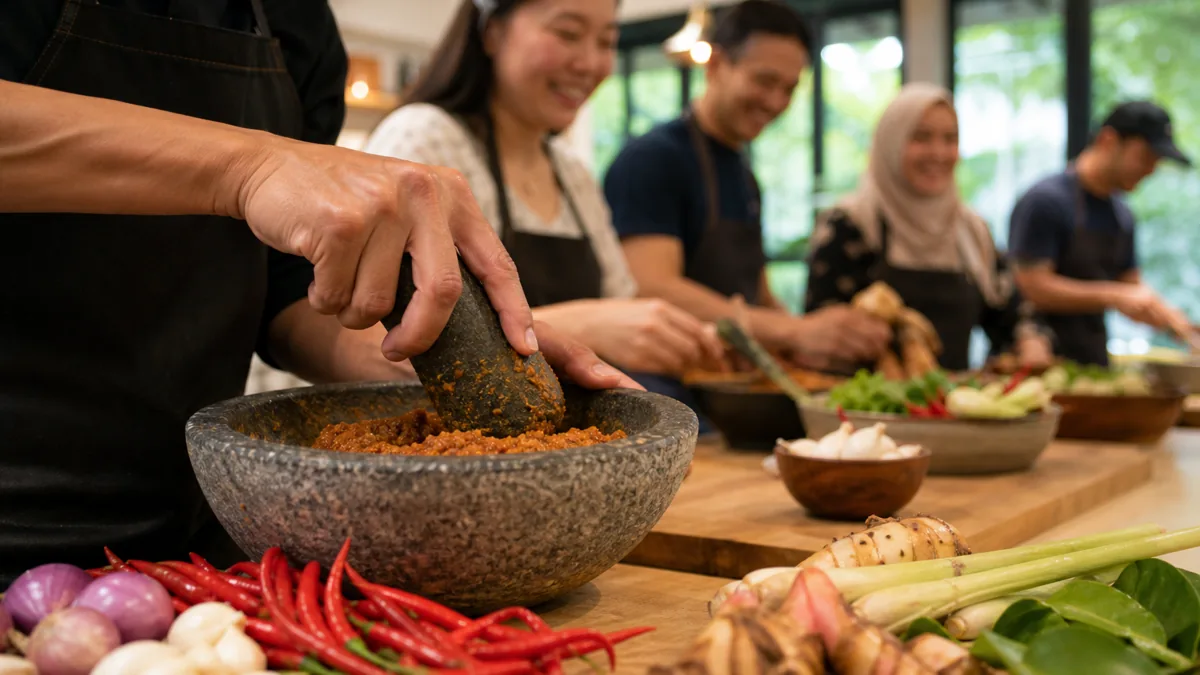
Singapore wears its food like a badge, from the Peranakan shophouses of Katong to the hawker stalls we defend in arguments with friends. Yet most of us only ever queue and order. A local cooking class Singapore groups can book turns that around, putting the mortar, the pestle, and the wok in your hands so you learn how our heritage flavours actually come together.
This guide covers what happens in a session, the dishes you might make, why local and Peranakan cooking is such a rewarding group activity, and how to plan one for a team, a couple, or a celebration.
What happens at a local cooking class Singapore session
The best sessions are hands-on from the first minute. You are not watching a chef work while you scribble notes. You are at the bench with a pile of shallots, chillies, and lemongrass in front of you, learning how the building blocks of our local kitchens fit together.
Peranakan and local cooking rewards patience and a well-made base over shortcuts, and a good session teaches you to work with a few fundamentals well:
- The rempah. Pounding fresh chillies, shallots, garlic, and aromatics into a fragrant spice paste, the backbone of so many nyonya dishes.
- The heat. Learning how a paste blooms in hot oil, and why that first sizzle sets the flavour of everything that follows.
- The balance. Tasting for the push and pull of salty, sweet, sour, and spicy that gives local food its character.
- The finish. Plating a dish the way a home kitchen would, generous and unfussy, ready to share.
By the end, local food stops being a stall number you memorise and becomes a set of moves your hands remember.
The dishes a Peranakan cooking class might cover
Part of what makes a Peranakan cooking class Singapore groups enjoy so satisfying is that the classics feel within reach once someone shows you the order of steps. Depending on the format, a group might make:
- A rempah-based main, where you pound your own paste and build it into a nyonya curry or a bright, punchy stir-fry.
- A local kueh, layering or steaming a traditional sweet that looks harder than it is.
- A sambal, balancing chilli, aromatics, and a touch of sweetness into a condiment that lifts any plate.
- A rice or noodle base to carry the dish, so the meal comes together as a proper spread.
Working through a couple of dishes gives everyone something to compare and swap at the table, which is half the fun of cooking together. If the sweet side draws you in, our kueh making workshop goes deeper on the colours, layers, and textures of these traditional treats.
The flavours you learn to balance
Ask anyone what makes local food so moreish and they tend to circle the same idea: layered flavour built with care. A good nyonya dish leans on a properly pounded rempah, then balances chilli heat, the sourness of tamarind or lime, a little sweetness, and salt from ingredients like belacan-style seasoning. Learning to taste for that balance is the real lesson of a local cooking class, and it sharpens how you cook everything else too.
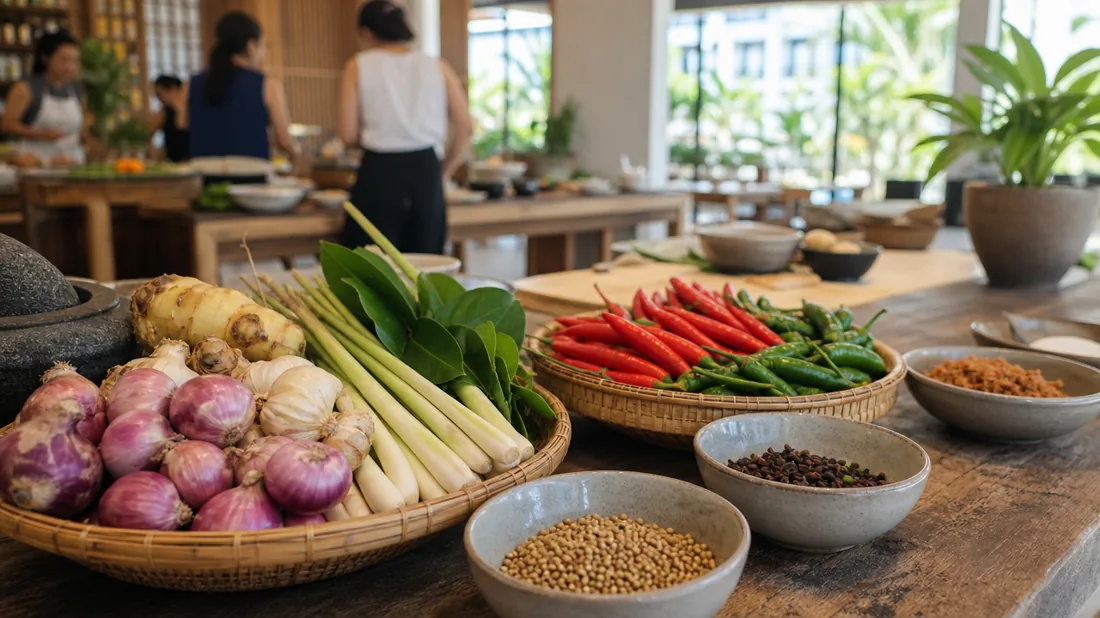
You also get to know the aromatics that give our food its signature. Lemongrass and galangal bring perfume, shallots and garlic carry the base, and chillies set the level of heat you want. Once you have pounded a paste by hand and cooked it off yourself, you understand why the homemade version tastes deeper and rounder than a jarred shortcut. This is exactly the territory our Singapore heritage cooking class is built around, celebrating the recipes that shaped how the island eats.
Why local cooking works so well for groups
There is something about a mortar and pestle that focuses a room. Pounding rempah is tactile, a little competitive, and impossible to do while checking your phone. Colleagues who barely speak in meetings end up comparing whose paste smells better and whose arm gave out first.
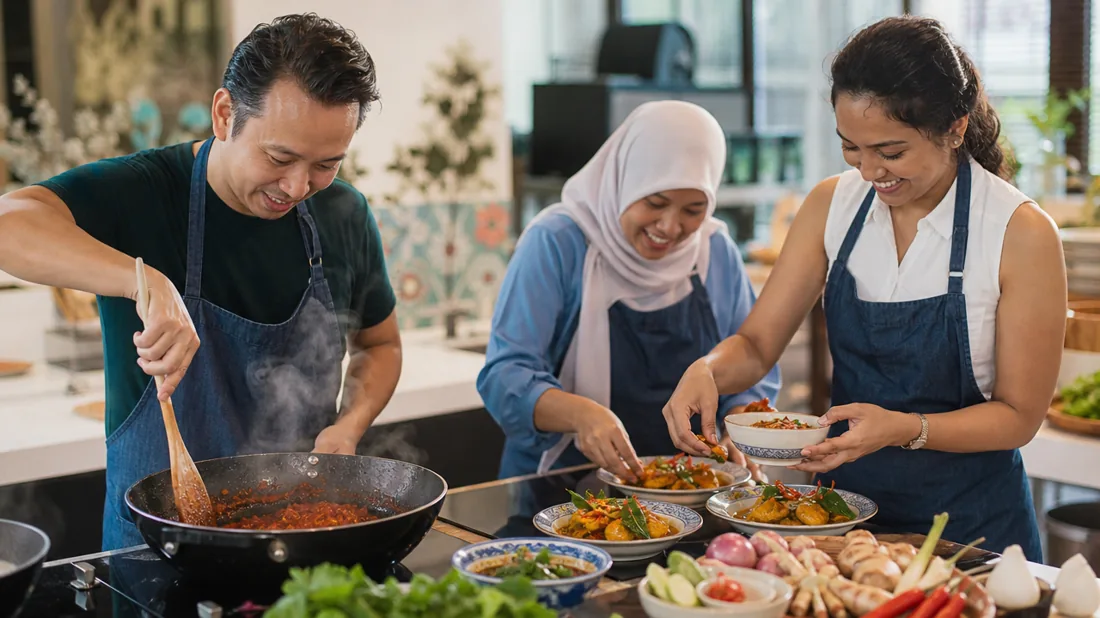
Local cooking also has a built-in payoff. The studio fills with the smell of spice paste hitting hot oil, and everyone sits down to eat what they made, hot and generous. For a team, that shared meal is a memory that outlasts any slideshow. Our cooking team building sessions turn that hands-on energy into a fully facilitated experience, with planning, ingredients, and cleanup handled for you.
Because local food suits a mixed crowd, it is a genuinely inclusive choice too. Every ingredient we use is halal-sourced as standard, so nobody checks labels and nobody sits out the tasting. For teams planning around inclusivity from the start, our halal team building sessions run on exactly that principle.
Good to know before you book
Group local sessions at our studio run around two to three hours, fully guided from the first pound of the pestle to the last plated dish. No cooking experience is needed, and every ingredient is halal-sourced, so mixed groups can share everything they make. We handle planning, ingredients, facilitation, and cleanup from start to finish.
The studio sits on Robinson Road, directly outside Raffles Place MRT (Exit F/G), which makes it easy for teams gathering from different offices in the CBD. A nyonya cooking class suits more than corporate groups, too. It is a warm pick for date nights, birthdays, and family days, and our private event formats flex to fit the occasion.
Conclusion
A local cooking class takes the food you already love and shows you how it works from the inside, from pounding your own rempah to balancing a dish the way a Peranakan home kitchen would. You learn where the flavours come from, cook dishes that once felt like hawker-only territory, and sit down to eat the results while they are hot. Whether you are planning a team activity people will actually remember or a lively session for a celebration, cooking local together delivers a real skill, a lot of easy conversation, and a meal you made with your own hands.
When you are ready, tell us about your group and we will shape a local heritage cooking session that fits.
Planning a corporate team-building activity? See our cooking team building experiences in Singapore, or explore corporate team building and team building dinners →
Plan a local heritage cooking session for your group
Halal-friendly, fully managed, and directly outside Raffles Place MRT (Exit F/G).
Get a quoteFrequently asked questions
What is a local cooking class in Singapore?
It is a hands-on session where you cook Singaporean and Peranakan dishes yourself, from pounding your own rempah to plating a nyonya classic. An instructor guides every step, so beginners finish with food they are proud of.
What dishes might a Peranakan cooking class cover?
Depending on the format, a group might make dishes built on a fresh spice paste, such as a nyonya curry or a stir-fry, alongside a local kueh or sambal. We shape the menu around your group before the session.
Do I need cooking experience to join?
None at all. Every session is fully guided, so complete beginners learn the order of steps and finish with real dishes. The pounding and stirring are the fun part, not a test.
Is the food halal?
At our studio, yes. Every ingredient we use is halal-sourced as standard, so the whole group can cook and eat together with no separate arrangements.
Does a local cooking class work for team building?
Very well. Pounding rempah and building a dish together gets colleagues talking, and everyone shares the meal at the end. Tell us your group size and we will tailor the session.