Kueh Making Workshop Singapore: A Taste of Heritage
 D'Open Kitchen · 4 Jul 2026 · 6 min read
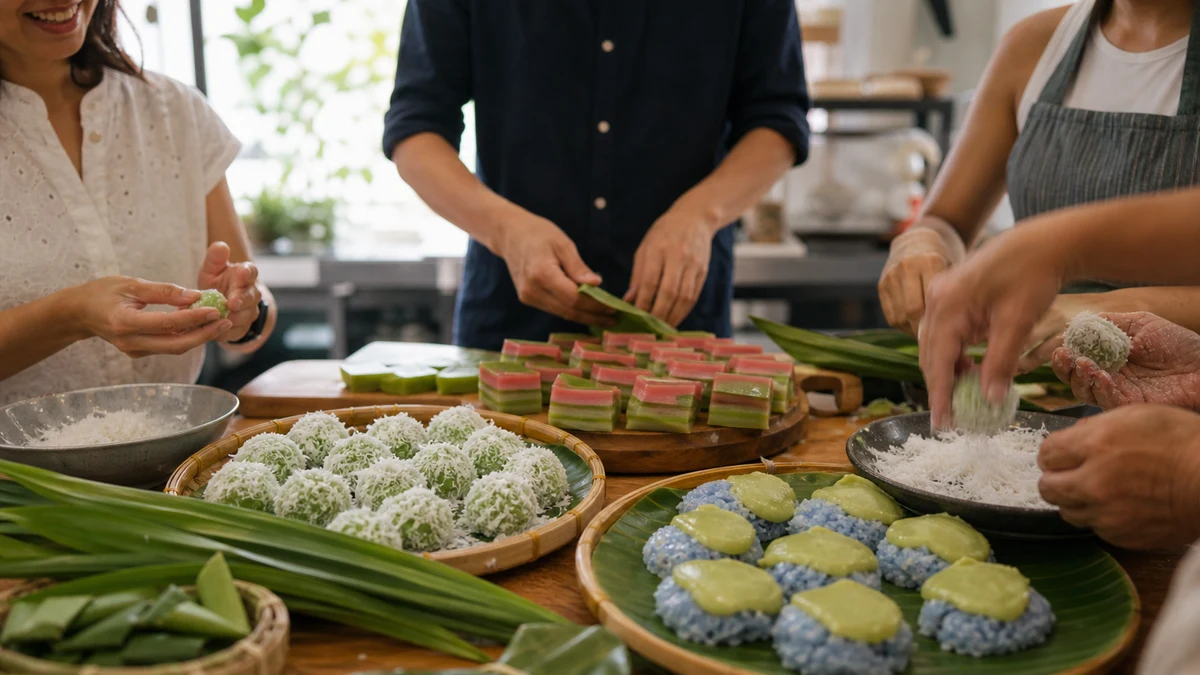
Kueh is the taste of a Singapore childhood. The bright green of ondeh ondeh, the gentle pull of kueh salat, the neat stripes of a steamed layer cake at every celebration and pasar malam. Most of us have eaten these bites our whole lives without ever making one. A kueh making workshop Singapore groups can book changes that, turning a familiar snack into a couple of hours where your own hands do the work.
This guide walks through what happens in a session, the heritage behind these little cakes, why kueh makes such a warm group activity, and how to plan one for a team, a celebration, or a family day.
What happens at a kueh making workshop Singapore session
The best sessions are hands-on from the start. You are not watching a demonstration from across the room. You are at the bench with pandan, coconut, and rice flour, learning the feel of each dough with someone experienced beside you.
Because many kueh rely on steaming and setting, sessions are paced around those steps. You prepare batters and fillings early, shape while things steam, then unmould and taste at the end. Along the way you cover the essentials:
- The flavours. Where the signature tastes come from, from fragrant pandan and rich coconut milk to the deep caramel of gula melaka.
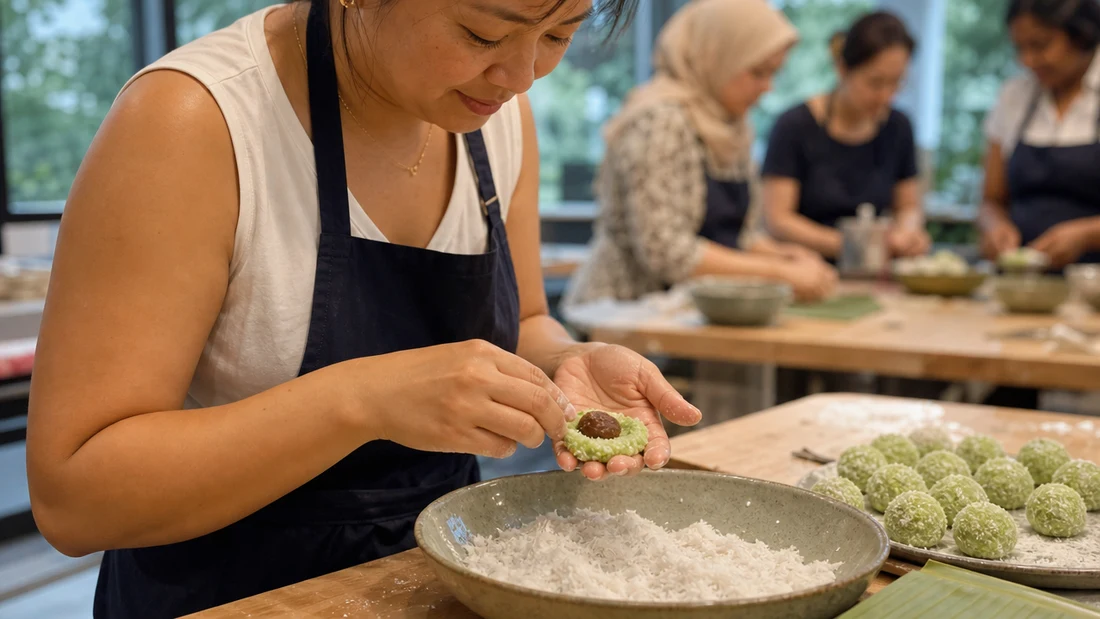
- The shaping. Rolling ondeh ondeh around a nugget of palm sugar so it bursts when you bite, and pleating or moulding other kueh by hand.
- The layers. How a steamed kueh lapis builds its stripes one thin pour at a time, and why patience is the real ingredient.
- The steam. Reading when a kueh is set, springy, and ready, rather than guessing at the clock.
- The finish. Rolling in fresh grated coconut, cutting clean pieces, and plating a spread that looks as good as it tastes.
By the end, kueh stops being something you buy at a stall and becomes something your hands know how to make.
The heritage in every bite
Kueh carries a lot of history for something so small. Many of the best loved kueh are nyonya kueh, born from Peranakan kitchens where Chinese ingredients met Malay techniques and local produce. That blend is exactly why they taste the way they do.
Making kueh by hand connects you to that story in a way eating never quite does. You feel why the coconut has to be fresh, why the pandan is squeezed rather than bottled, why a layer cake is poured slowly and never rushed. A heritage cooking class leans right into that history, and a kueh session is one of the most hands-on ways to taste it. If you enjoy the traditional, seasonal side of local cooking, our guides to a mooncake making workshop and a pineapple tart class make good companion reads.
From ondeh ondeh to kueh lapis
Part of what makes kueh such a good workshop is the variety. Each one uses slightly different hands-on skills, so a session stays interesting from start to finish. Depending on the format, a group might make:
- Ondeh ondeh, chewy pandan balls filled with gula melaka that bursts warm when you bite in, then rolled in fresh coconut.
- Kueh salat, a firm blue-tinged glutinous rice base topped with a smooth pandan custard.
- Steamed kueh lapis, the classic striped layer cake built one careful pour at a time.
- Kueh dadar, a soft pandan crepe rolled around sweet coconut and palm sugar.
Working through a few different kueh gives everyone something to compare and swap at the table, which is half the joy of making food together. It also means there is a shape or a step to suit every pair of hands in the room.
Why kueh making works so well for groups
There is something about shaping kueh that settles a room. It is tactile, unhurried, and impossible to do while scrolling your phone. Colleagues who barely talk in meetings end up comparing how neatly they rolled their ondeh ondeh or how straight their layers came out.
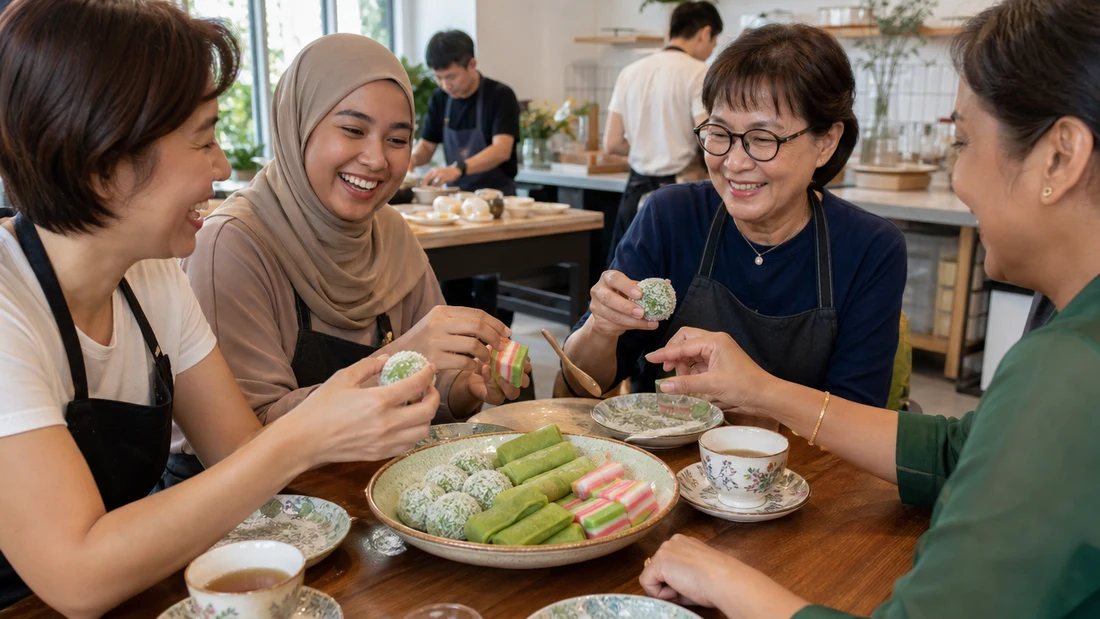
Kueh also has a built-in payoff. The studio fills with the smell of pandan and steamed coconut, and everyone sits down to taste what they made, fresh and warm. For a team, that is a shared memory you can carry home in a box. Our cooking team building sessions turn that hands-on energy into a fully facilitated experience, with planning, ingredients, and cleanup handled for you.
Because kueh is naturally suited to a mixed crowd, it is a genuinely inclusive choice too. Every ingredient we use is halal-sourced as standard, so nobody checks labels and nobody sits out the tasting. For teams planning around inclusivity from the start, our halal team building sessions run on exactly that principle.
Good to know before you book
Group kueh sessions at our studio run around two to three hours, fully guided from the first mix to the final unmoulding. No baking experience is needed, and every ingredient is halal-sourced, so mixed groups can share everything they make. We handle planning, ingredients, facilitation, and cleanup from start to finish.
The studio sits on Robinson Road, directly outside Raffles Place MRT (Exit F/G), which makes it easy for teams gathering from different offices in the CBD. Kueh suits more than corporate groups, too. It is a lovely pick for birthdays, family days, and casual celebrations, and our private event formats flex to fit the occasion. For a broader look at short, hands-on options, our roundup of one-day cooking classes in Singapore is a useful place to start.
Conclusion
A kueh making workshop takes some of Singapore’s most nostalgic snacks and puts them in your hands, colours, textures, and heritage and all. You learn where the flavours come from, shape kueh that once seemed like a stall-only skill, and sit down to taste the results while they are fresh. Whether you are planning a team activity people will actually remember, or a warm session for a birthday or family day, making kueh together delivers something rare: a real skill, a lot of easy conversation, and a box of little cakes to share.
When you are ready, tell us about your group and we will shape a kueh making session that fits.
Planning a corporate team-building activity? See our cooking team building experiences in Singapore, or explore corporate team building and team building dinners →
Plan a kueh making session for your group
Halal-friendly, fully managed, and directly outside Raffles Place MRT (Exit F/G).
Get a quoteFrequently asked questions
Do I need any baking experience to make kueh?
None at all. Most kueh come together by hand with simple shaping, steaming, and layering, so first-timers pick them up quickly. An instructor beside you means your first ondeh ondeh or layer of kueh lapis turns out right.
How long does a kueh making workshop take?
Group sessions at our studio typically run two to three hours. That gives you time to prepare the batters and doughs, shape and steam your kueh, and sit down to taste what you made while it is fresh.
What kinds of kueh will we make?
It depends on the session, but popular picks include ondeh ondeh, kueh salat, steamed kueh lapis, and kueh dadar. Tell us your preferences and we will build the menu around the ones your group is most keen to try.
Is the kueh halal?
At our studio, yes. Every ingredient we use is halal-sourced as standard, so the whole group can mix, shape, and eat together with no separate arrangements.
Does a kueh making workshop work for team building?
Very well. The shaping and layering are hands-on and unhurried, which gets colleagues chatting, and everyone leaves with a box of kueh they made themselves. Share your group size and we will tailor the session.