
Sushi Making Class Singapore: Roll Your Own, Together
 D'Open Kitchen · 26 Jul 2026 · 5 min read
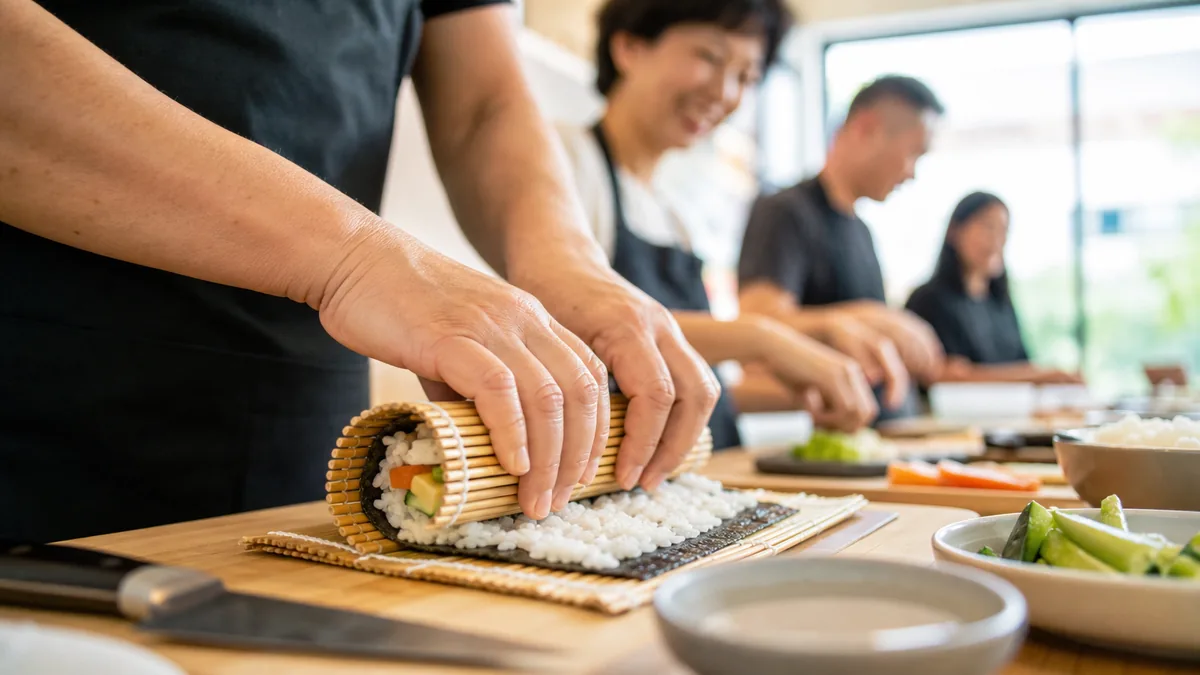
Sushi looks deceptively simple until you try to make it. The rice never behaves, the roll falls apart, and the neat little pieces on a restaurant plate suddenly feel like magic. A sushi making class Singapore groups can book takes the mystery out of it, putting the rice, the nori, and the bamboo mat in your hands so you learn how those tidy rolls actually come together.
This guide walks through what happens in a session, the forms you will practise, why sushi is such a good group activity, and how to plan one for a team, a couple, or a celebration.
What happens at a sushi making class Singapore session
The best sessions are hands-on from the first minute. You are not watching a chef work while you take notes. You are at the bench with a bowl of warm rice and a sheet of nori in front of you, learning the small techniques that make sushi hold together and taste right.
Sushi rewards attention to a few fundamentals over speed, and a good session teaches you to work with each one:
- The rice. Seasoning cooked rice with a balanced vinegar mix and folding it so the grains stay separate and glossy, not mushy.
- The hands. Wetting your fingers, shaping the right amount of rice, and pressing nigiri firmly enough to hold without crushing it.
- The roll. Spreading rice on nori, placing the filling, and using the bamboo mat to roll tight and even every time.
- The cut. Slicing a roll into clean pieces with a wet blade, so each one looks as good as it tastes.
By the end, sushi stops being a restaurant-only treat and becomes a set of moves your hands remember.
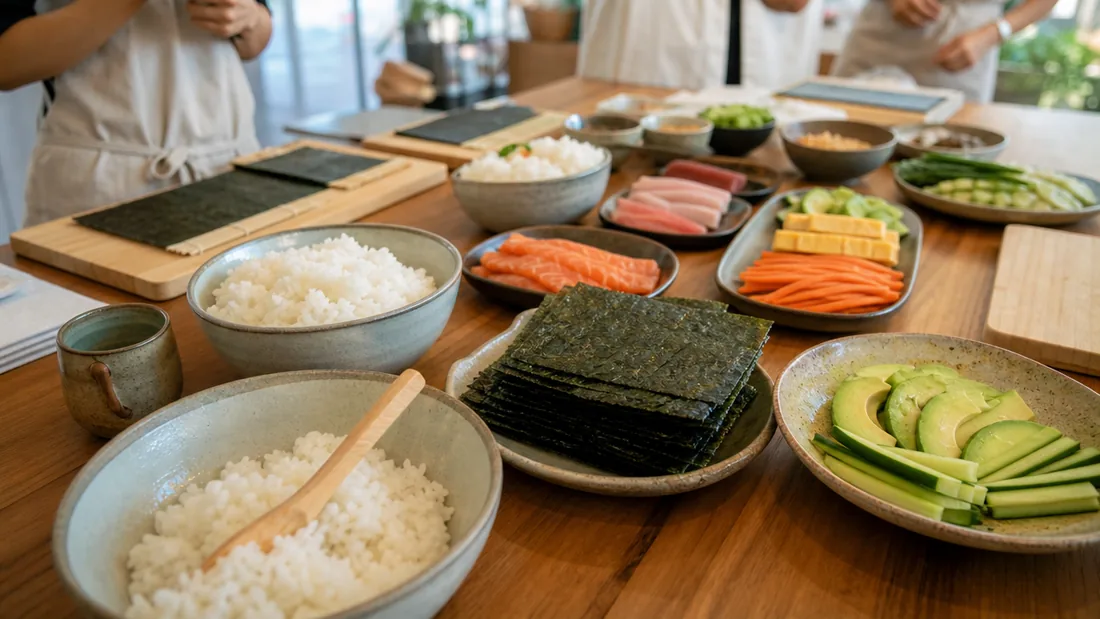
The sushi forms you will practise
Part of what makes a sushi making class so satisfying is that each form feels within reach once someone shows you the order of steps. Depending on the format, a group might make:
- Maki, the classic rolled sushi cut into rounds, where the bamboo mat does most of the work once you get the pressure right.
- Nigiri, hand-pressed fingers of rice topped with your chosen ingredient, all about the feel of the rice.
- Uramaki, the inside-out roll with rice on the outside, a fun step up once the basic roll clicks.
- Temaki, the hand roll shaped like a cone, quick to make and easy for a first-timer to nail.
Working through a couple of forms gives everyone something to compare and swap at the table, which is half the fun of making sushi together. If Japanese food draws you in more broadly, our Japanese cooking class in Singapore goes wider than sushi alone.
Tips for a roll that actually holds
Most first-time wobbles come down to a few small habits, and picking them up early makes the whole session smoother. Keep these in mind and your rolls will look the part sooner than you think:
- Do not overfill. A thin, even layer of rice and a modest line of filling roll far more neatly than an overstuffed one.
- Keep your hands damp. A small bowl of water stops the rice sticking to your fingers instead of the nori.
- Roll with steady pressure. Firm and even beats hard and rushed, so the roll holds its shape without squashing.
- Wet the blade before you cut. A damp knife glides through cleanly, giving you tidy rounds rather than a squashed mess.
None of this needs practice at home. In a guided session the instructor corrects your grip and pressure as you go, so the fixes stick.
Why sushi making works so well for groups
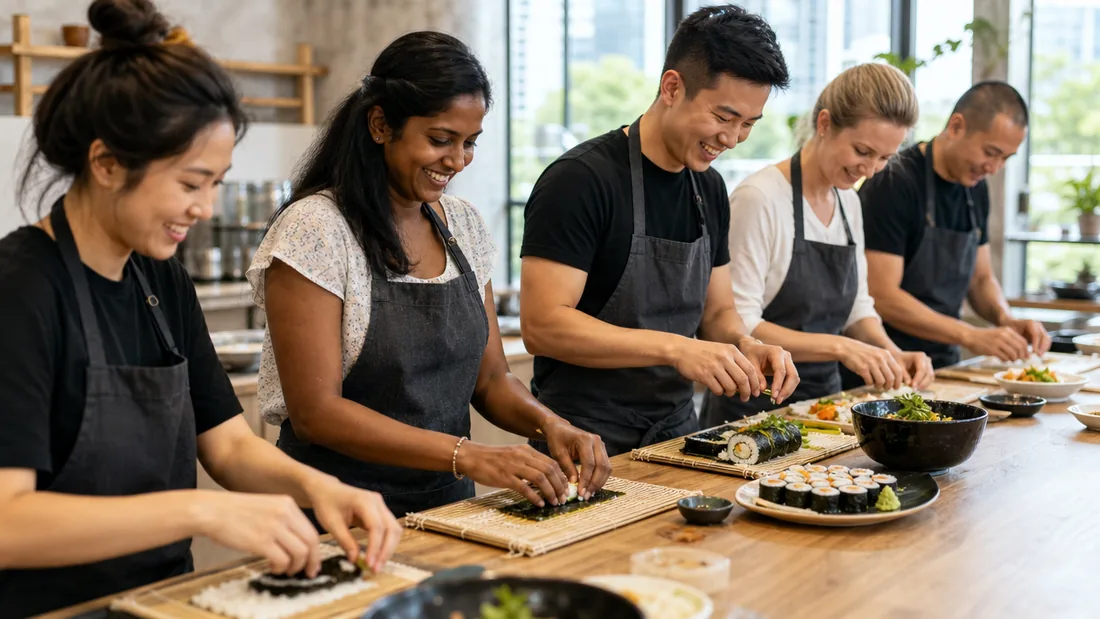
There is something about a rolling mat that focuses a room. Getting a maki roll tight and even is tactile, a little competitive, and impossible to do while checking your phone. Colleagues who barely speak in meetings end up comparing whose roll held together and whose fell apart on the first slice.
Sushi making also has a built-in payoff. The bench fills with colour as rolls get sliced and plated, and everyone sits down to eat what they made. For a team, that shared platter is a memory that outlasts any slideshow. Our cooking team building sessions turn that hands-on energy into a fully facilitated experience, with planning, ingredients, and cleanup handled for you.
Because sushi suits a mixed crowd, it is a genuinely inclusive choice too. Every ingredient we use is halal-sourced as standard, so nobody checks labels and nobody sits out the tasting. For teams planning around inclusivity from the start, our halal team building sessions run on exactly that principle.
Good to know before you book
Group sushi sessions at our studio run around two to three hours, fully guided from seasoning the rice to slicing your final roll. No experience is needed, and every ingredient is halal-sourced, so mixed groups can share everything they make. We handle planning, ingredients, facilitation, and cleanup from start to finish.
The studio sits on Robinson Road, directly outside Raffles Place MRT (Exit F/G), which makes it easy for teams gathering from different offices in the CBD. A sushi workshop suits more than corporate groups, too. It is a lively pick for date nights, birthdays, and family days, and our private event formats flex to fit the occasion.
Conclusion
A sushi making class takes food you already love and shows you how it works from the inside, from seasoning the rice to rolling a roll that actually holds. You learn where the technique comes from, practise a few forms that once felt out of reach, and sit down to eat the results while they are fresh. Whether you are planning a team activity people will genuinely remember or a hands-on session for a celebration, making sushi together delivers a real skill, a lot of easy conversation, and a platter you built with your own hands.
When you are ready, tell us about your group and we will shape a sushi making session that fits.
Planning a corporate team-building activity? See our cooking team building experiences in Singapore, or explore corporate team building and team building dinners →
Plan a hands-on sushi making session for your group
Halal-friendly, fully managed, and directly outside Raffles Place MRT (Exit F/G).
Get a quoteFrequently asked questions
What happens at a sushi making class in Singapore?
You learn to season sushi rice, then shape and roll your own nigiri and maki by hand. An instructor guides each step, so beginners finish with a plate of sushi they made themselves.
Do I need any experience to join a sushi making class?
None at all. Every session is fully guided from seasoning the rice to the final roll, so complete beginners keep up easily. The rolling is the fun part, not a test.
Is the sushi halal?
At our studio, yes. Every ingredient we use is halal-sourced as standard, so the whole group can make and eat sushi together with no separate arrangements.
How long does a sushi making session run?
Group sessions typically run around two to three hours, fully facilitated. That leaves plenty of time to practise a few forms and sit down to eat what you made.
Does a sushi making class work for team building?
Very well. Rolling side by side gets colleagues talking, and everyone shares the platter at the end. Tell us your group size and we will tailor the session.