
Mystery Box Challenge Singapore: Why Constraint Beats Choice
 D'Open Kitchen · 2 Aug 2026 · 9 min read
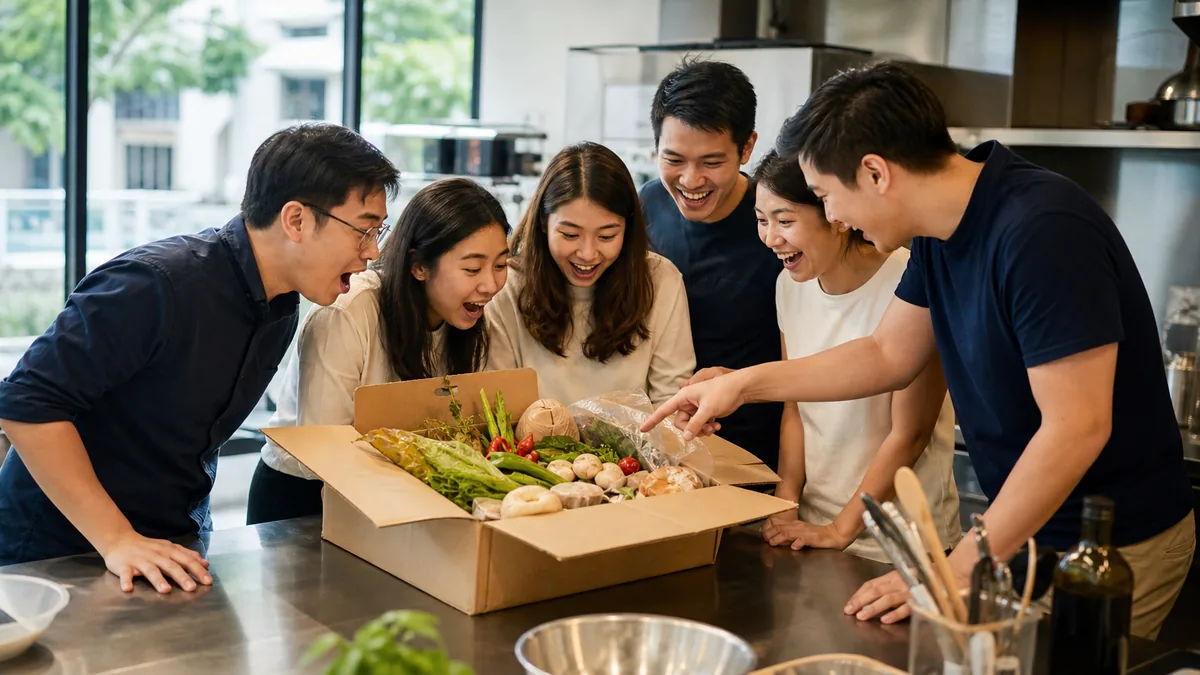
Ask a team to design their own bonding activity and they almost always ask for more. More choice, a fully stocked kitchen, no time limit, the freedom to cook whatever they fancy. The Mystery Box Challenge Singapore teams keep coming back to does the exact opposite, and that is precisely why it works.
At D’Open Kitchen, our Mystery Box cooking team building format hands every group an identical box of surprise ingredients they cannot swap or skip. Less choice, tighter constraint, and somehow more creativity, more talking, and more of the moments people actually remember afterwards. This is a close look at the single mechanic that makes it tick: the surprise reveal, and the odd psychology of why a locked box pulls a team together.
The Mystery Box Challenge Singapore, explained
The setup is simple to describe and much harder to master. Each team receives the same sealed box, opened together at the start of the session. Inside is a spread of ingredients chosen by our chefs, some obvious, some that make people raise an eyebrow. The job is to turn that box into one complete, plated dish before the clock runs out.
There is a small shared pantry for the basics, think oils, salt and a few aromatics, so no team is left without foundations. Beyond that, what is in your box is what you cook with. No swapping with the group next to you, no quiet trip out to buy the thing you wish you had. The constraint is the whole point.
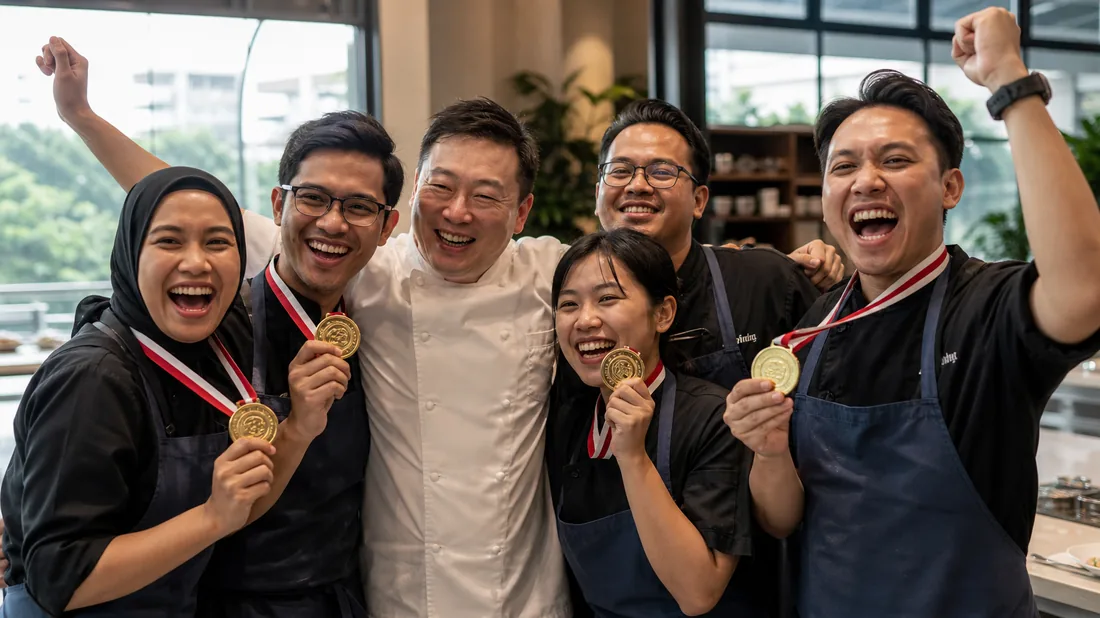
At the end, a chef tastes and judges every dish, and the room finds out who read their box best. It is competitive cooking team building with a twist, because everyone starts from the same puzzle and nobody can coast on a recipe they already know by heart.
The reveal: the most important thirty seconds
Watch a session closely and you notice the whole thing turns on one moment. The box opens. For a second or two, nobody says anything.
Then it starts. Someone lifts an ingredient and turns it over. Someone else names a dish, half question and half suggestion. A third person is already counting portions in their head. In the space of half a minute, a group of colleagues shifts from standing around a table to leaning over it together, and the energy in the room changes with them.
That shift is the emotional heart of the format. There is real surprise, a flicker of “how on earth do we use this”, and then the quick, collective scramble to make sense of it. You cannot manufacture that reaction in an open kitchen, because an open kitchen never asks the question in the first place.
Why constraint beats choice for team dynamics
Here is the part that surprises people. Give a team unlimited options and, more often than not, the group gets smaller. The confident home cook takes the lead, picks a dish they have made before, and everyone else slots into sous-chef roles or drifts to the edges. Choice concentrates the work in the hands of whoever is surest.
A mystery box flips that. When nobody has cooked this exact combination before, the usual expert loses their head start. The analytical planner who never touches a stove suddenly has the most useful brain in the group. The quiet colleague turns out to be the one who spots that the missing acidity could come from the single lonely lime in the corner of the box. Equal footing turns spectators into contributors.
Give a team everything and the loudest cook takes over. Give them a locked box, and everyone leans in, because for once, nobody has done this before.
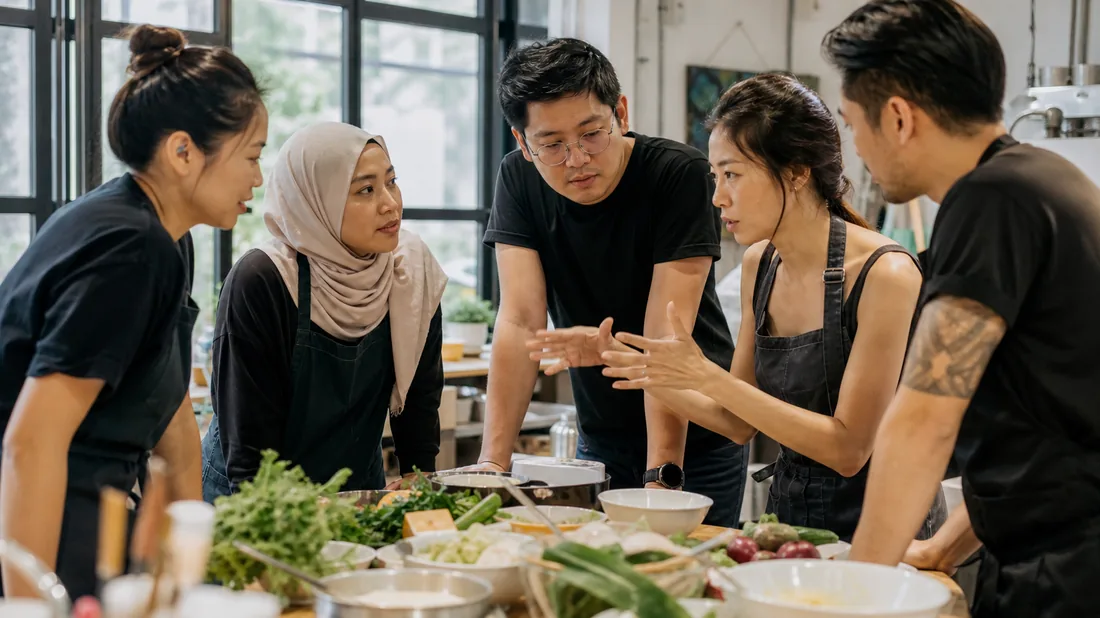
That is not a motivational poster talking. It is a pattern you can watch play out session after session. Constraint lowers the stakes of speaking up, because there is no obvious right answer to be wrong about. It rewards noticing over knowing. And it forces the kind of fast, low-ego negotiation, what do we make, who does what, how long do we have, that teams rarely get to practise at their desks.
How the Mystery Box Challenge is judged
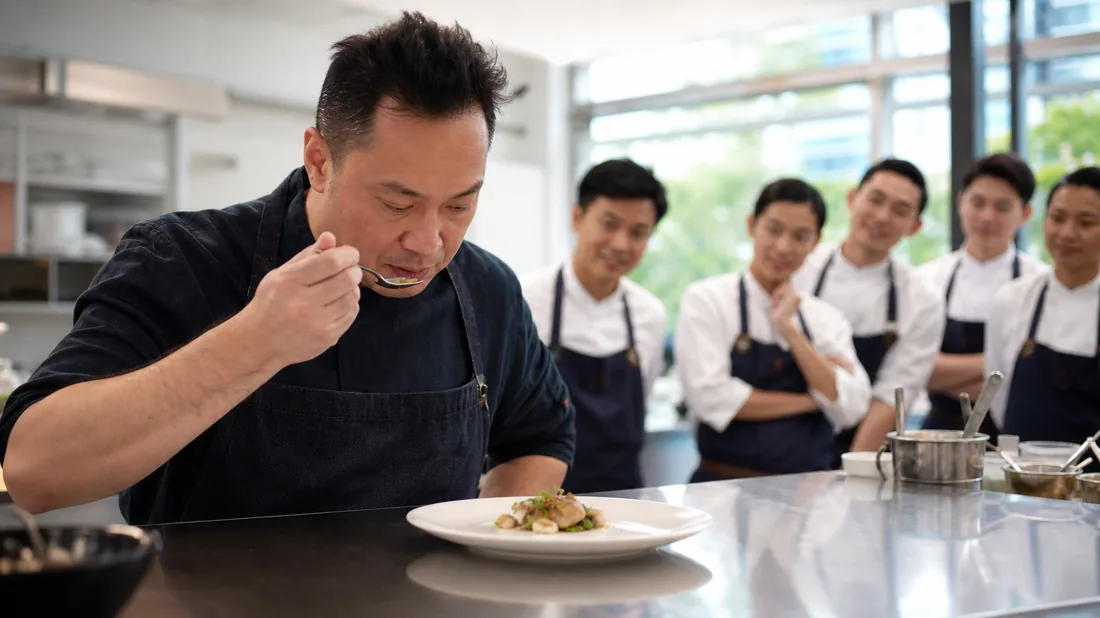
A challenge is only as good as the standard it is held to, which is where the judging comes in. Every session ends with a chef tasting each team’s dish and scoring it on three things: creativity with the box, execution under pressure, and how well the team actually worked together. That last one carries as much weight as the food.
Our founder, Trish Yee, placed third in MasterChef Singapore Season 2, and she built the judging around those three pillars on purpose. Creativity keeps teams from playing it safe. Execution keeps them honest about the basics, because a clever idea still has to taste good. And the teamwork score means the group that communicated well is rewarded, not just the one that happened to have a strong cook on the bench. Chef-judged is not a marketing line here. It is a real standard, applied by someone who has stood on the other side of the pass.
Who the Mystery Box Challenge suits best
This format is not for every group, and that is a good thing. It shines for:
- Teams who have done the bowling, the escape room and the karaoke night, and now want something with more substance.
- Groups with a wide spread of skills, because the mystery box compresses the gap between the keen cook and the total beginner.
- New-hire cohorts and cross-departmental mixers, where people do not yet know each other’s strengths and the box gives them a fast, low-pressure way to find out.
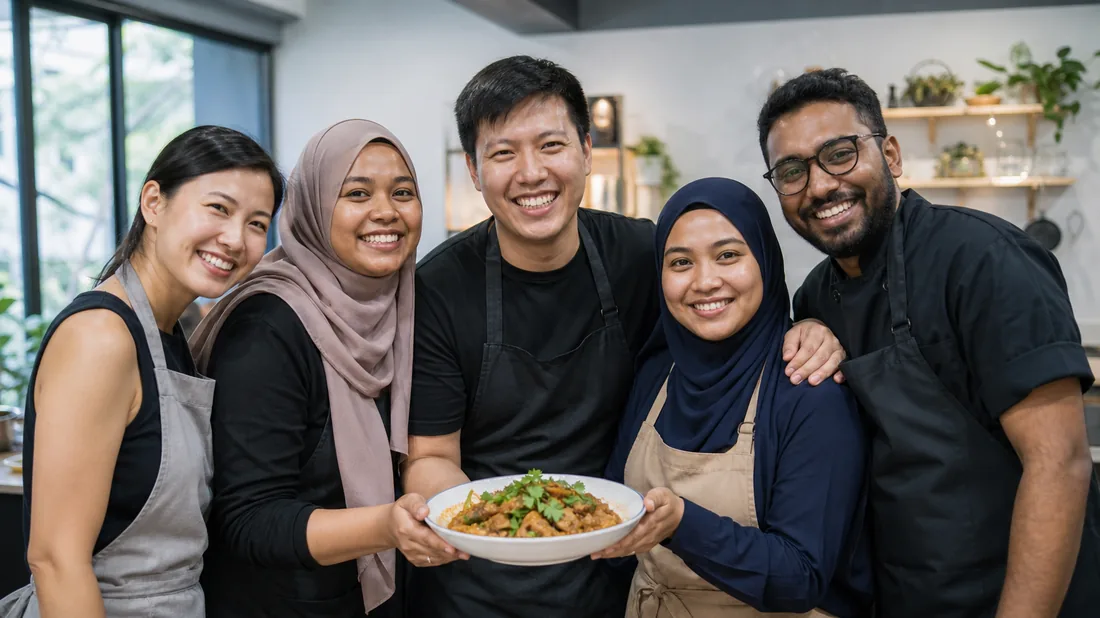
Because every ingredient we use is halal-sourced as standard, mixed teams can take part and eat together with no separate arrangements, which is exactly why the challenge works for genuinely diverse offices. If halal is a priority for your group, our halal team building options hold the same standard across every format.
One honest caveat. If your team would rather cook side by side than go head to head, the competition might not be the draw. For those groups, our non-competitive Cook and Bond format keeps the hands-on cooking and the shared meal while dropping the scoreboard, and you can compare it on our team building masterclass page.
Mystery Box vs D’Open Kitchen’s other signature formats
The Mystery Box Challenge sits within a range of programmes, each built around a different mechanic. It helps to see where it fits alongside the rest of our team building line-up.
Our open MasterChef-style cook-off gives teams a theme and a stocked kitchen, so it rewards ambition and polish rather than improvisation. Amazing Race In The Kitchen runs on pace and problem-solving, sending teams through a series of timed culinary stations. And the Bake-Off Challenge trades savoury pressure for the precision and presentation of the oven.
Mystery Box is the constraint-based one. Where the cook-off asks “how good can you make it” and the Amazing Race asks “how fast can you move”, Mystery Box asks “what can you do with exactly this”. If you want the full picture of how these formats compare on group size, budget and halal, our complete guide to corporate cooking team building is the place to start.
Planning a Mystery Box Challenge session
The practical side is deliberately painless. Sessions run for groups of around 10 to 30 or more, and a typical challenge takes about three hours from the opening briefing, through the cook, to the judging and the meal. You do not need any cooking experience, because the format assumes you do not have it, which is half the fun.
Teams walk away with the meal they built, the winning table’s bragging rights, and a set of photos that catch the reveal, the scramble and the plating. We handle the planning, the ingredients, the facilitation and the cleanup, so the only thing your group has to do is show up and open the box.
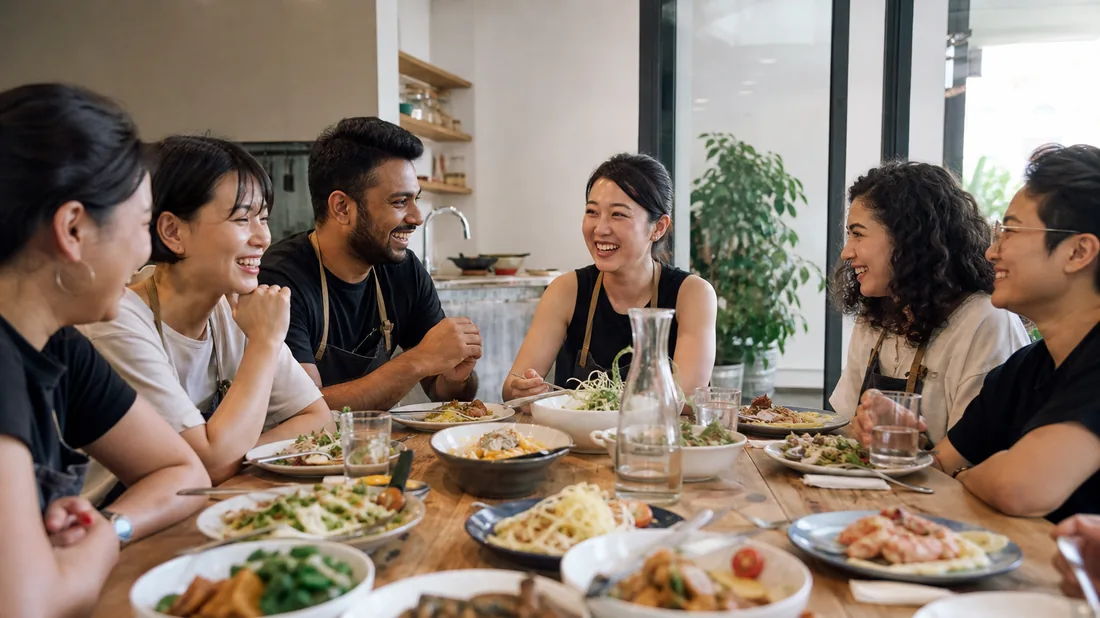
The studio is at 18 Robinson Road, #03-02, directly outside Raffles Place MRT (Exit F/G), which makes it easy to reach straight after work. When the cooking is done, the room turns into a proper sit-down team dinner, and that shared meal is often the part people talk about on the way home. To lock in a date, message us on WhatsApp at +65 8901 2697 or book a Mystery Box Challenge session through our cooking team building page.
FAQ
The questions above cover the ones we hear most, from box themes and allergies to skill levels and peak-season booking. If yours is not there, a quick message with your group size and occasion is the fastest way to a clear answer.
Ready to open the box?
If your team is tired of activities that only really involve the confident few, the Mystery Box Challenge Singapore offices keep rebooking might be the reset you need. Less choice, more connection, and a dish nobody saw coming. Tell us your group size and what you are marking, and we will handle the rest. Start on our Mystery Box Challenge and cooking team building page, or send your details through the enquiry form and we will help you plan it.
Planning a corporate team-building activity? See our cooking team building experiences in Singapore, or explore corporate team building and team building dinners →
Curious whether the Mystery Box Challenge suits your team? Tell us your numbers
Halal-friendly, fully managed, and directly outside Raffles Place MRT (Exit F/G).
Get a corporate quoteFrequently asked questions
Can teams request a specific mystery box theme, like Italian, Asian or festive?
Yes. While the individual ingredients stay a surprise on the day, we can tune the box towards a cuisine or a seasonal theme when you book, so the challenge still fits the mood of your event.
What happens if someone is allergic to something in the box?
Tell us any allergies or dietary needs when you book and we build the boxes around them, so nothing in a team's box puts a member at risk. Every ingredient is halal-sourced as standard too.
How does the format handle very different skill levels?
That is where it shines. Because nobody has cooked this exact combination before, the confident cook loses their head start and the whole team problem-solves from the same line, which closes the skill gap fast.
Can we do a hybrid where half the box is a mystery and half is chosen?
We can. A partial-mystery format keeps some of the surprise while letting teams pick a few anchor ingredients, which suits groups who want a gentler version of the challenge. Just ask when you enquire.
How far ahead should we book for Q4 or peak season?
Year-end and festive dates fill up quickly, so the earlier the better. If you have a rough window in mind, message us and we will hold what we can while you confirm numbers.