Korean Cooking Class Singapore: Cook It Yourself
 D'Open Kitchen · 16 Jul 2026 · 5 min read
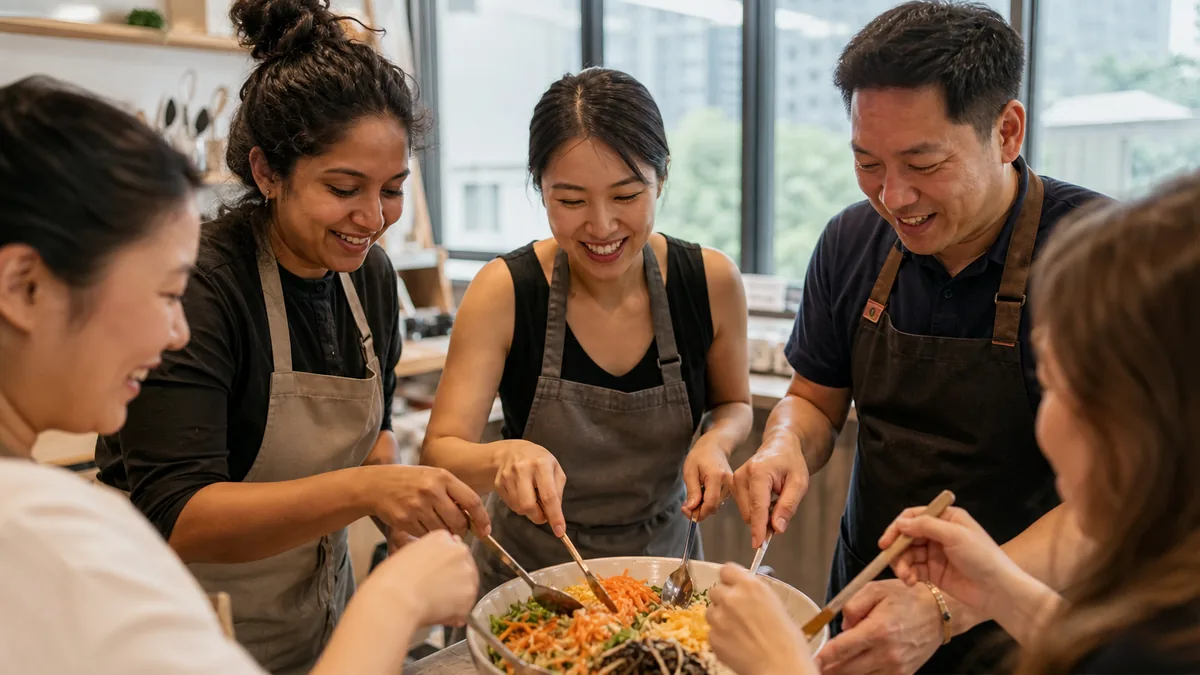
Korean food is everywhere in Singapore now, from the fried chicken queues to the bibimbap you grab at lunch, yet most of us only ever order it. A Korean cooking class Singapore groups can book flips that around, putting the knife, the rice paddle, and the mixing bowl in your hands so you learn how those punchy, comforting flavours actually come together.
This guide covers what happens in a session, the dishes you might make, why Korean cooking is such a lively group activity, and how to plan one for a team, a couple, or a celebration.
What happens at a Korean cooking class Singapore session
The best sessions are hands-on from the first minute. You are not watching a chef cook while you scribble notes. You are at the bench with a knife and a bowl, learning how the building blocks of Korean cooking fit together and getting messy in the good way.
Korean home cooking is built on a handful of pillars, and a good session teaches you to use them with confidence:
- The rice. Getting a pot of short-grain rice right, then seasoning it for kimbap or leaving it plain to carry a bibimbap.
- The paste. Learning what gochujang and doenjang bring, and how a spoonful transforms a marinade, a stew, or a dressing.
- The vegetables. Blanching, seasoning, and arranging the little side dishes that make a Korean spread feel generous.
- The finish. Balancing sweet, savoury, and heat, then plating so the bowl looks as good as it tastes.
By the end, Korean food stops being a menu you scan and becomes a set of moves your hands remember.
The dishes a Korean session might cover
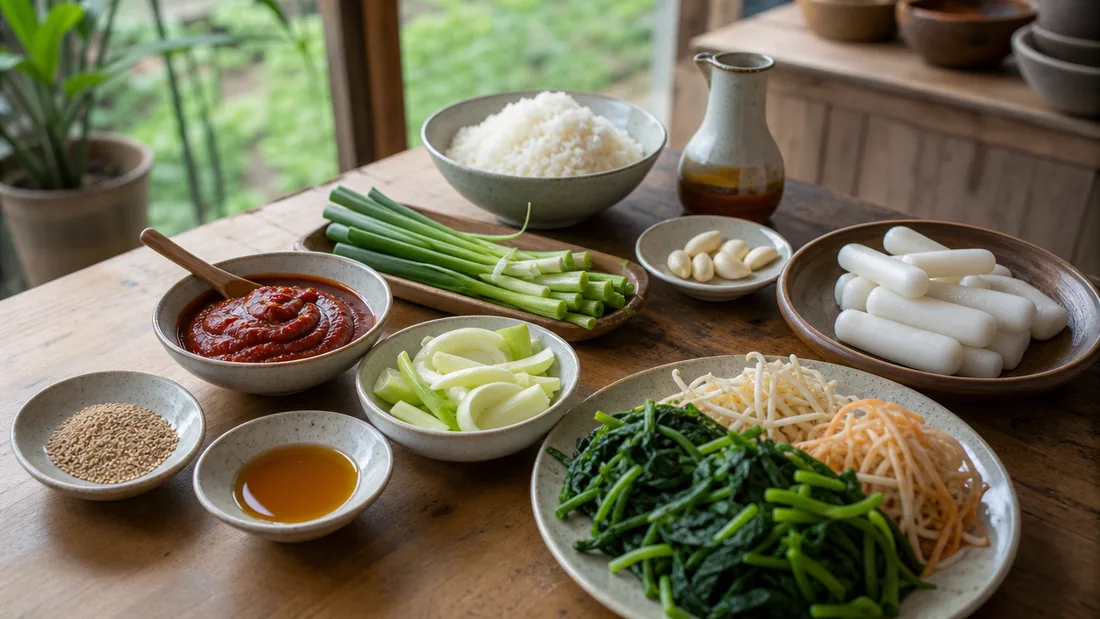
Part of what makes Korean such a good workshop is that the classics are approachable once someone shows you the order of steps. Depending on the format, a group might make:
- Bibimbap, the colourful rice bowl where you arrange seasoned vegetables and a savoury protein, then mix it all with gochujang at the table.
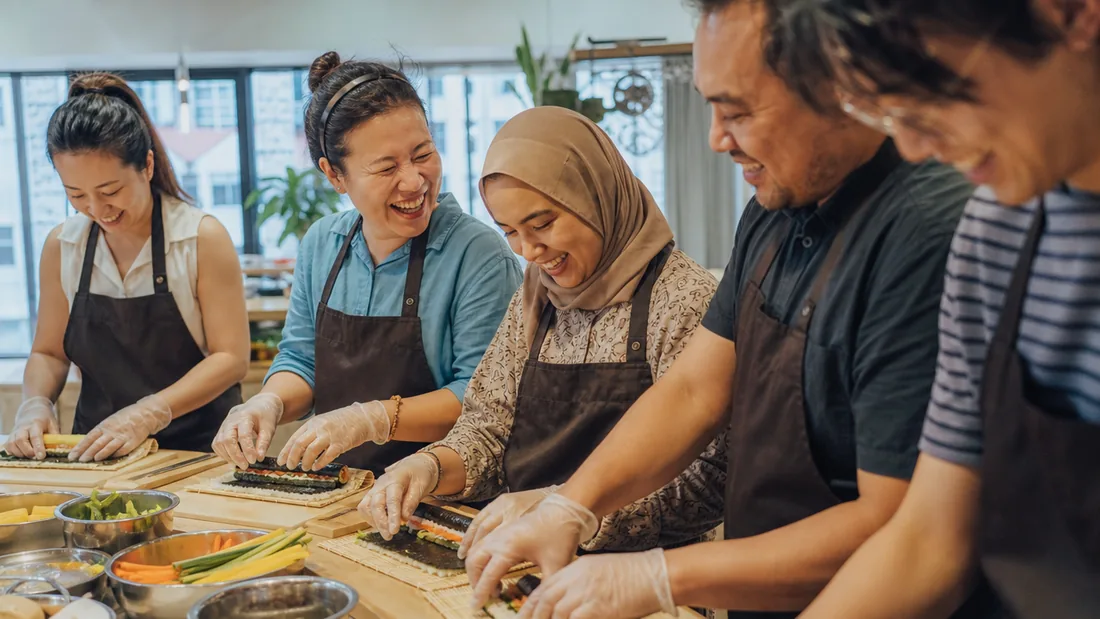
- Kimbap, the rolled rice and vegetable parcels that take a little practice and a lot of laughing to get neat.
- Tteokbokki, the chewy rice cakes simmered in a sweet and spicy sauce that has become a street-food favourite here.
- Japchae, the glass noodles stir-fried with vegetables and a glossy, savoury seasoning.
Working through a couple of dishes gives everyone something to compare and swap at the table, which is half the fun of cooking together.
The flavours you learn to balance
Ask anyone what makes Korean food moreish and they will land on the same idea: depth. A good Korean dish layers savoury, sweet, and heat so no single note runs away with it. Learning to taste for that balance is the real lesson of a Korean cooking class, and it changes how you cook everything else too.
You also get to know the pantry staples that give Korean food its signature character. Gochujang brings a slow-building heat and a deep savoury sweetness, sesame oil adds a nutty finish, and garlic and spring onion tie it all together. Once you have built a marinade by hand, you understand why the homemade version tastes so much rounder than a shortcut. If you enjoy exploring Asian cooking hands-on, our Thai cooking class makes a natural companion read, and our roundup of the best cooking classes in Singapore lays out the wider spread of options.
Why Korean cooking works so well for groups
There is something about rolling a tray of kimbap that loosens a room. It is fiddly, a little competitive, and impossible to do while checking your phone. Colleagues who barely speak in meetings end up comparing whose roll held together and whose fell apart.
Korean cooking also has a built-in payoff. The studio fills with the smell of toasted sesame and simmering sauce, and everyone sits down to eat what they made, hot and fresh. For a team, that shared meal is a memory that outlasts any slideshow. Our cooking team building sessions turn that hands-on energy into a fully facilitated experience, with planning, ingredients, and cleanup handled for you.
Because Korean food suits a mixed crowd, it is a genuinely inclusive choice too. Every ingredient we use is halal-sourced as standard, so nobody checks labels and nobody sits out the tasting. For teams planning around inclusivity from the start, our halal team building sessions run on exactly that principle.
Good to know before you book
Group Korean sessions at our studio run around two to three hours, fully guided from the first bowl of rice to the last plate. No cooking experience is needed, and every ingredient is halal-sourced, so mixed groups can share everything they make. We handle planning, ingredients, facilitation, and cleanup from start to finish.
The studio sits on Robinson Road, directly outside Raffles Place MRT (Exit F/G), which makes it easy for teams gathering from different offices in the CBD. Korean cooking suits more than corporate groups, too. It is a warm pick for date nights, birthdays, and family days, and our private event formats flex to fit the occasion.
Conclusion
A Korean cooking class takes a cuisine you already love and shows you how it works from the inside, from seasoning your own rice to balancing that final spoonful of gochujang. You learn where the flavours come from, cook dishes that once felt like restaurant-only territory, and sit down to eat the results while they are hot. Whether you are planning a team activity people will actually remember or a lively session for a celebration, cooking Korean together delivers a real skill, a lot of easy conversation, and a meal you made with your own hands.
When you are ready, tell us about your group and we will shape a Korean cooking session that fits.
Planning a corporate team-building activity? See our cooking team building experiences in Singapore, or explore corporate team building and team building dinners →
Plan a Korean cooking session for your group
Halal-friendly, fully managed, and directly outside Raffles Place MRT (Exit F/G).
Get a quoteFrequently asked questions
Do I need any cooking experience for a Korean cooking class?
None at all. An instructor walks you through each step, from seasoning rice to plating a bibimbap, so complete beginners finish with dishes they are proud of.
How long does a Korean cooking class in Singapore take?
Group sessions at our studio typically run two to three hours. That is enough time to prep, cook a couple of dishes, and sit down to eat what you made while it is hot.
Is the food halal?
At our studio, yes. Every ingredient we use is halal-sourced as standard, so the whole group can cook and eat together with no separate arrangements.
How spicy is Korean food, and can we tone it down?
You control the heat. Gochujang and chilli go in to taste, so each pair can make their dish milder or bolder. Spice lovers and gentle eaters both leave happy.
Does a Korean cooking class work for team building?
Very well. Rolling kimbap and mixing bibimbap side by side gets colleagues talking, and everyone shares a meal at the end. Tell us your group size and we will tailor the session.