
Company Retreat Ideas Singapore Teams Actually Enjoy
 D'Open Kitchen · 16 Aug 2026 · 7 min read
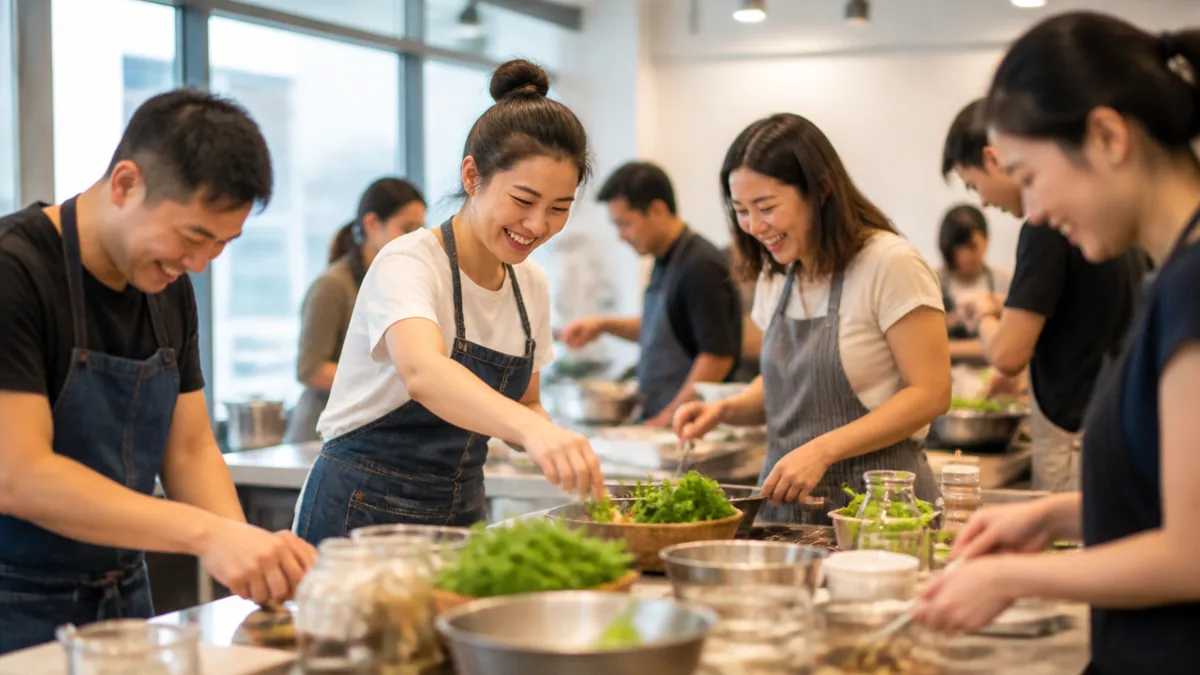
Planning a retreat is one of those jobs that looks simple until you start. You need something that suits thirty different personalities, fits a budget, works in Singapore’s weather, and does not end with half the team quietly checking their phones. Most company retreat ideas Singapore organisers find online are either an outdoor obstacle course or a hotel ballroom with a projector, and neither is quite it.
The good news is that the bar for a memorable retreat is lower than people think, and it has very little to do with spend. What matters is whether everyone can genuinely take part. Here is how to think about the activity slot in your agenda, plus the formats that tend to land well with teams here.
What makes a retreat activity actually work
Before the ideas, a quick filter. The activities people remember tend to share three things, and the ones that flop usually fail on at least one.
First, everybody can join at the same level. If an activity rewards athleticism, or prior knowledge, or being loud, you have quietly split the room into performers and spectators. Second, it produces something shared at the end, a meal, a result, a story. Third, it leaves room to talk. Activities that demand total concentration for two hours are impressive but they do not build relationships, because nobody speaks.
Run your shortlist through those three and a surprising number of popular options drop out.
Company retreat ideas Singapore teams keep asking for
Here are the formats that come up most often, with an honest note on who each one suits.
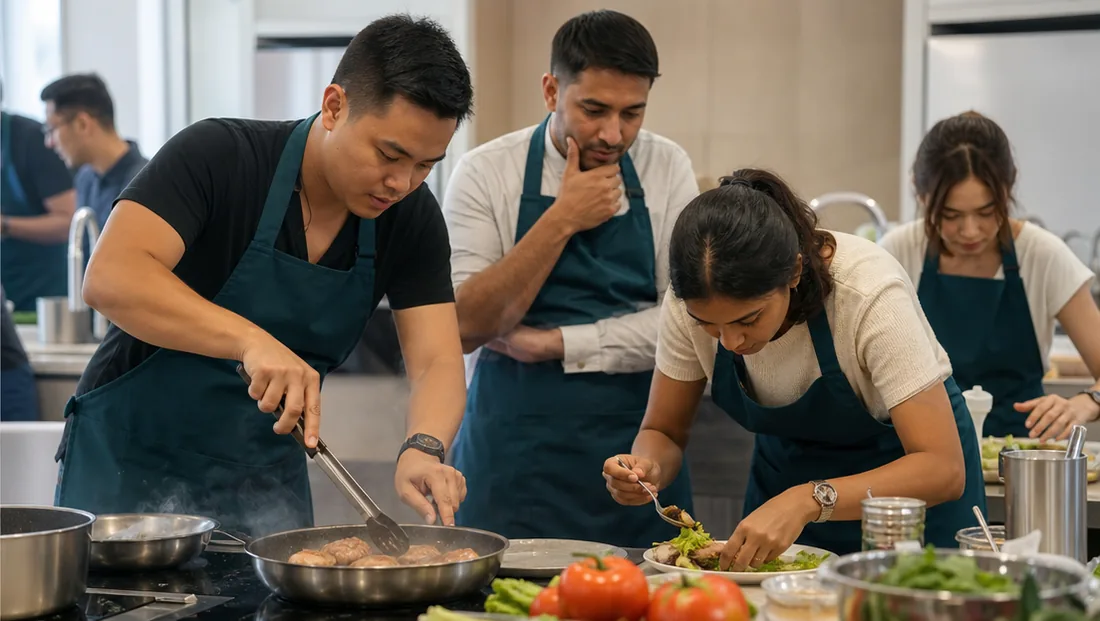
- A hands-on cooking session. Teams cook in small groups, then sit down and eat what they made. Low barrier, high conversation, and the shared meal at the end does a lot of the bonding work for you.
- A competitive cook-off or challenge format. Same idea with a scoreboard. Good for sales teams and any group that enjoys a bit of edge, less good for groups who would rather not compete with each other.
- A workshop with a take-home craft. Baking, chocolate, cake decorating. Gentler pace, and people leave holding something, which tends to extend the memory of the day.
- A structured strategy session followed by something physical. The classic retreat shape. Works if the second half is genuinely a change of mode, not another meeting with snacks.
- An outdoor activity. Great when the weather cooperates. Have an indoor backup, because in Singapore you will need it more often than you expect.
- A volunteering or community half day. Meaningful, though it needs more lead time and coordination than most organisers budget for.
If you want to go deeper on the non-cooking options, our guide to indoor team building activities covers what works when the weather rules out anything outside.
Why cooking suits a retreat better than most activities
We are a cooking studio, so treat this as a biased view with a reason attached. Cooking passes the three-part filter almost by accident.
Nobody arrives as an expert, or at least, the one person who is loses their advantage the moment the recipe is unfamiliar. The work naturally divides into roles, so the colleague who never speaks in workshops turns out to be the one keeping the timing straight. And because your hands are busy but your mouth is not, people talk. Properly talk, not networking-event talk.
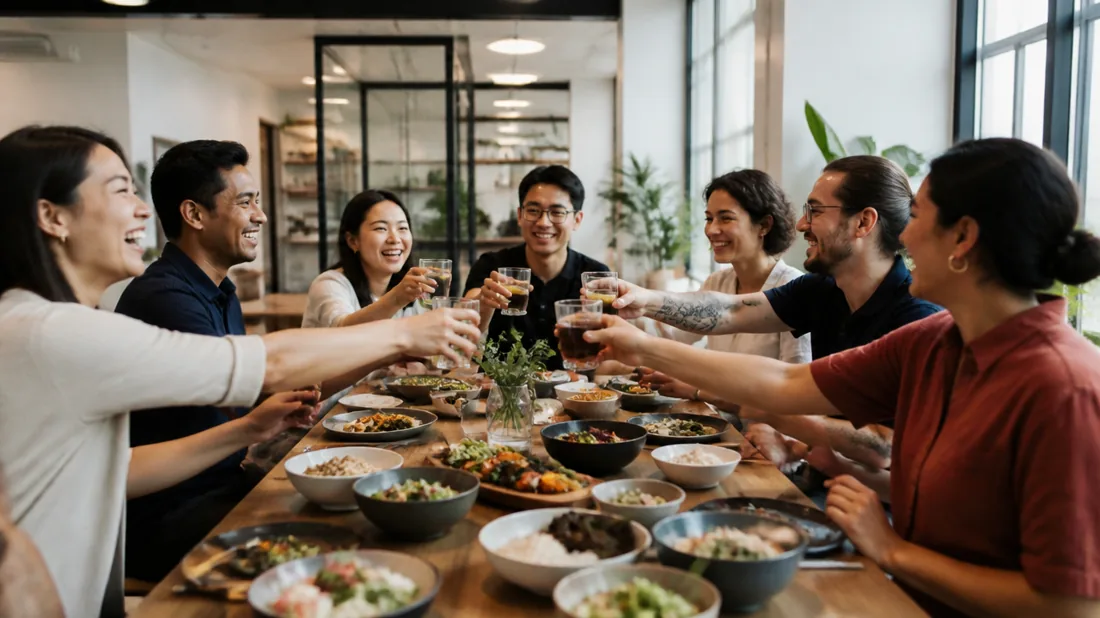
Then there is the ending. Most retreat activities finish with a scoreboard and an awkward pause before the next agenda item. A cooking session finishes with everyone sitting down together to eat what they just made, which is a much better transition into the rest of your day. Our team building dinner format leans into exactly that, turning the cook into a proper sit-down meal.
Fitting the activity into a half day or full day
The most common planning mistake is squeezing too much in. A retreat agenda that runs back to back leaves no room for the informal conversations that are usually the real point of getting everyone in one place.
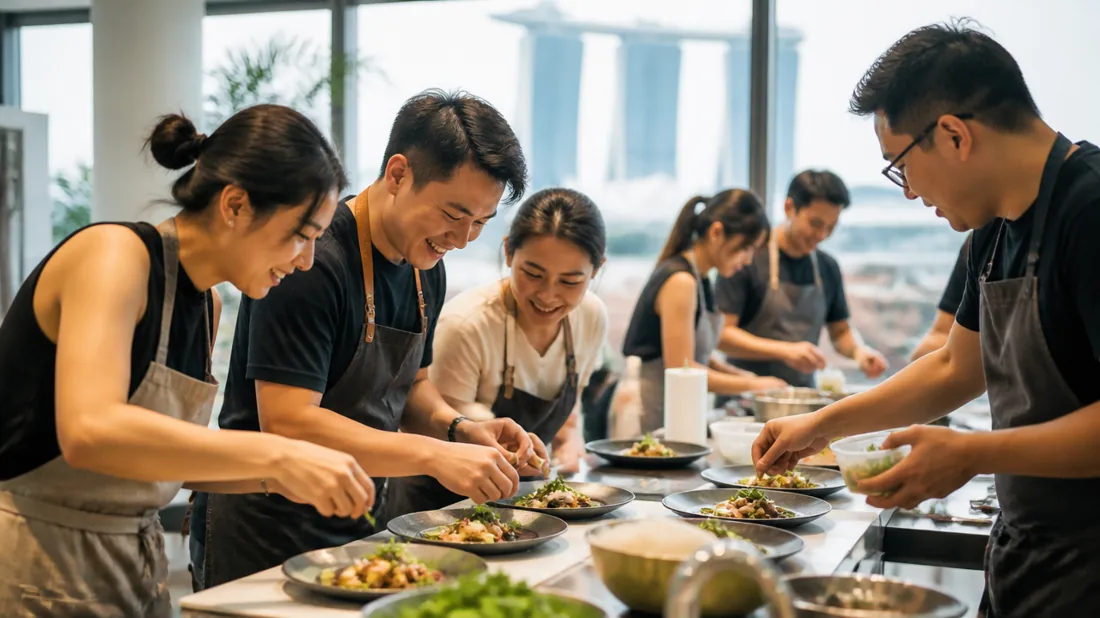
For a half day, one substantial activity plus a meal is plenty. A cooking session runs about two to three hours from briefing to eating, which leaves time either side for a short business update or simply for people to arrive without rushing.
For a full day, the shape that works well is business content in the morning while attention is fresh, lunch, then something hands-on in the afternoon when a room full of people has stopped absorbing slides. Ending the day with a meal you cooked together is a far better closing note than a final presentation.
If you are still mapping out the day, our team bonding activities round-up has more options to slot alongside whichever main activity you choose.
Good to know before you book
A few practical points that come up in almost every enquiry:
Session length. Ours run two to three hours, including the cooking and the meal. No cooking experience is needed at any point, and the briefing assumes you have none.
Halal as standard. Every ingredient we use is halal-sourced, so the whole team takes part and eats together with nothing arranged separately. That matters more than people expect when a retreat has a shared meal at its centre. Our halal team building page has the detail if this is a priority for your group.
Location. The studio is at 18 Robinson Road, #03-02, directly outside Raffles Place MRT (Exit F/G). Central enough that people can get there straight from the office, or straight from home if the retreat starts elsewhere.
We handle the rest. Planning, ingredients, facilitation and cleanup are all on us. For an organiser already juggling a venue, an agenda and a headcount that keeps changing, having one part of the day fully managed is worth a lot.
Group size. Both small teams and large ones work, they just feel different. Smaller groups get more conversation, larger groups get the team versus team energy.
Matching the format to your team
A short guide to choosing, based on what we see most often.
If your team is competitive and knows each other well, a challenge format gives them something to push against. If you have new hires or a recently merged team, a collaborative cooking session is better, because you want people finding each other’s strengths rather than defending their own. If the group spans a wide range of ages or physical abilities, cooking is one of the few activities where that genuinely does not matter.
For a fuller comparison of the corporate formats and how they differ on group size and pacing, our complete guide to corporate cooking team building walks through each one. You can also see the full range on our team building page.
FAQ
The questions above cover what organisers ask us most, from retreat length and lead time to halal and group size. If yours is not there, a quick message with your dates and headcount usually gets a clearer answer than any general guide can.
Ready to plan your retreat?
The best company retreat ideas Singapore teams talk about afterwards are rarely the most elaborate ones. They are the ones where everybody was actually involved, and where the day ended with people sitting down together rather than filing out separately. Tell us your dates, your headcount and roughly what you are hoping the day does for the team, and we will build the session around it. Start on our cooking team building page, message us on WhatsApp at +65 8901 2697, or send your details through the enquiry form.
Planning a corporate team-building activity? See our cooking team building experiences in Singapore, or explore corporate team building and team building dinners →
Planning a retreat? Tell us your dates and headcount and we will build the session around it
Halal-friendly, fully managed, and directly outside Raffles Place MRT (Exit F/G).
Get a corporate quoteFrequently asked questions
How long should a company retreat in Singapore be?
Most teams here run either a half day or a full day, sometimes with an evening component. A cooking session usually takes two to three hours, which slots neatly into either shape without swallowing the whole agenda.
What is a good retreat activity for a team with very mixed interests?
Something everyone can join at the same level. Cooking works well because no experience is needed, the quiet colleagues get a real role, and the whole group ends up sharing a meal rather than watching one person perform.
How far in advance should we book a retreat activity?
The earlier the better, especially for year-end and festive periods when dates go quickly. If you have a rough window rather than a fixed date, message us and we will tell you what is still open.
Can a retreat activity work for a team with halal requirements?
Yes. Every ingredient we use is halal-sourced as standard, so mixed teams cook together and eat together with no separate catering arrangements to organise.
Do retreat activities work for small teams as well as large ones?
They do. Smaller groups tend to get more conversation and more individual hands-on time, while larger groups get the energy of team versus team. Tell us your headcount and we will suggest the format that fits.