Chinese New Year Cooking Class Singapore: Cook a Reunion Feast
 D'Open Kitchen · 27 Aug 2026 · 6 min read
Every year the same question comes round. What do we actually do for Chinese New Year, beyond another table booking and another round of the same small talk? The Chinese New Year cooking class Singapore teams and families keep asking us about answers it neatly, because it turns the feast itself into the activity instead of the thing you sit through afterwards.
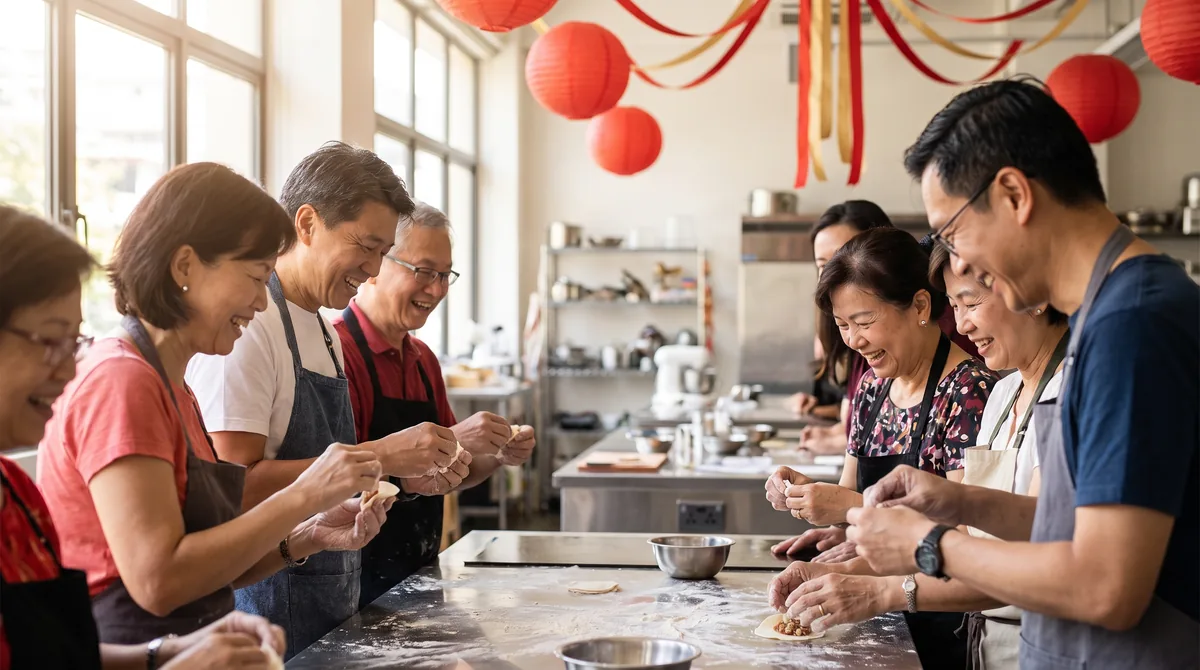
At D’Open Kitchen, our festive sessions put your team or your family behind the counter, folding, shaping and steaming the dishes the season is built around. You still eat well at the end. You just earn it first, and you have something to talk about the whole way through.
Chinese New Year cooking class Singapore: why it beats a restaurant booking
A reunion dinner at a restaurant does one job well. Everyone eats. But the seating chart decides who you talk to, the room is loud, and an hour in, half the table is on their phones.
Cooking together changes the shape of the evening. People move around. They swap stations, compare their sad first dumpling with someone else’s, and end up talking to colleagues or relatives they would normally nod at across a table. The food arrives at the end as a shared result rather than a delivery.
There is a practical upside too. A festive session runs about two to three hours and is fully managed, so nobody in your group is stuck chasing a venue, a caterer and an activity provider separately.
What you actually cook
The exact menu depends on the format you pick and the size of your group, but the festive sessions lean on the dishes people associate with the season. Think hands-on, recognisable, and satisfying to plate up.
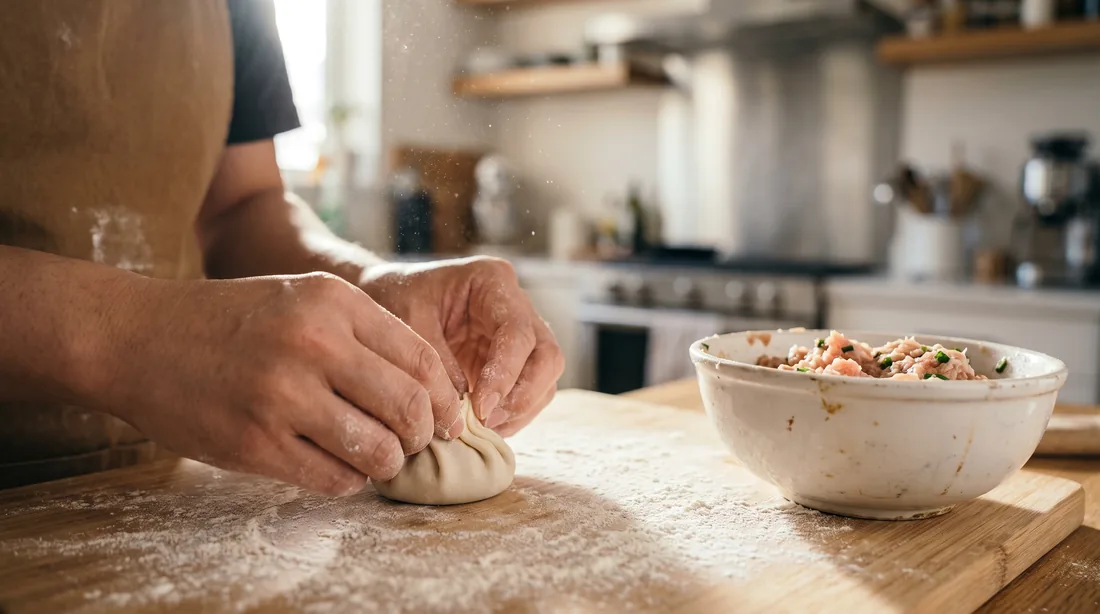
- Dumplings. The classic starting point. Easy to attempt, surprisingly hard to make neat, and a reliable source of laughter when the first few come out looking like a shipwreck.
- Steamed and pan-fried favourites. Dishes that come together in stages, so the group naturally splits into roles without anyone assigning them.
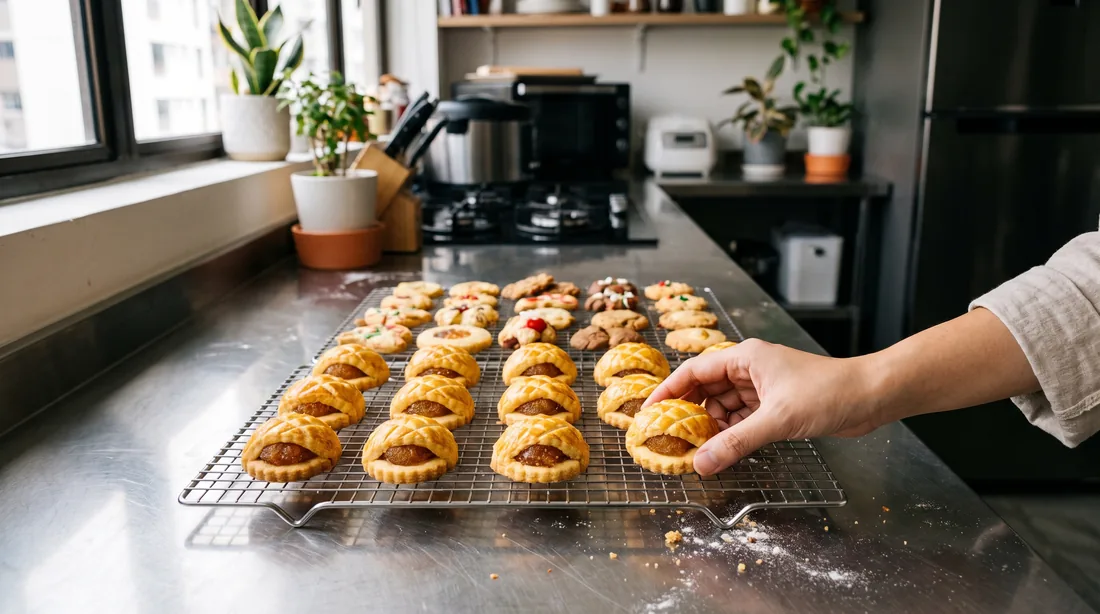
- Festive bakes and cookies. Pineapple tarts and their cousins, where the shaping is the fun part and the results travel home well.
- Something to share at the end. A plated dish the whole room sits down to, which is the closest thing to a reunion dinner you cooked yourselves.
If your group is more interested in the local heritage angle than the competitive one, our Singapore heritage cooking class formats dig into the dishes and techniques behind Singapore’s food culture, which sits naturally alongside a festive session.
Formats: corporate, family, or somewhere in between
For teams
Companies use the CNY window for a lo hei lunch, a year-opening gathering, or a thank-you session before the year gets busy. A cooking team building format adds a light competitive edge, with teams working in parallel and a chef tasting at the end. It gives quieter team members something to do with their hands, which is often when the real conversation starts.
For families and friends
The same session works as a private event with your own guest list. Multi-generational groups do well here, because there is a job for everyone. Someone rolls, someone folds, someone supervises with strong opinions, and the grandparents usually turn out to be the ones with the best technique.
For mixed groups
Plenty of bookings sit in between, a department plus their plus-ones, or a small business and its regulars. Tell us the shape of the group when you enquire and we will suggest a format that fits.
How a festive session actually runs
People picture a cooking class as a chef talking at the front while everyone watches. Ours does not work that way, and the difference matters for a festive group.
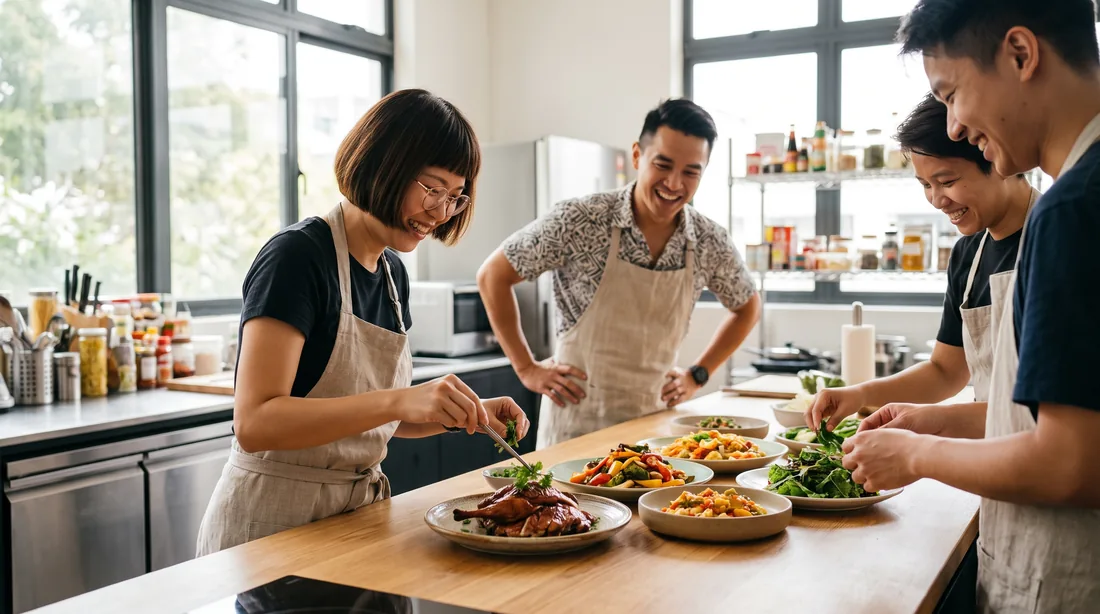
You arrive to stations already set up, with your ingredients laid out and a chef walking the room. Each dish is demonstrated in short steps, then you go and do it. The chef circles back, corrects the grip, rescues the pastry that has gone too warm, and moves on. Nobody is left standing around waiting for a turn.
The middle stretch is the loud part. Teams settle into a rhythm, someone appoints themselves quality control, and the room fills with the noise of a working kitchen. Then everything comes together, plates go down, and the group sits and eats what it made. That last half hour, with everyone finally still and full, is usually the bit people describe when they talk about it later.
Good to know before you book
A few practical points that come up in almost every festive enquiry.
- Session length. Typically two to three hours, including the cooking and the eating.
- Halal, always. Every dish uses strictly halal-sourced ingredients, so a mixed team can share the same food without a separate arrangement. If halal is a hard requirement for your group, our halal team building page covers how we handle it.
- No experience needed. A chef demonstrates every step and stays on the floor throughout.
- Central location. Our studio is at 18 Robinson Road, directly outside Raffles Place MRT (Exit F/G), which keeps it easy for people coming from all over the island.
- We handle everything. Planning, ingredients, facilitation and cleanup are all on us. You show up and cook.
- Dietary needs. Tell us about allergies or restrictions when you book so we can build the menu around them rather than improvising on the day.
Timing your session
The trickiest part of a CNY booking is usually the calendar, not the cooking. The stretch either side of the new year is the busiest period of the year for us, and it overlaps with everyone else’s year-end planning.
The groups who get the slot they want tend to enquire well before the season, sometimes months ahead, with a flexible date range rather than a single fixed evening. If your dates are firm, say so early. If they are not, a two or three week window gives us far more room to place you.
Weekday lunch and afternoon slots are often easier to secure than evenings, and they suit corporate groups who would rather not eat into people’s own time. It is worth asking about both before you settle.
What people remember afterwards
Ask a group about last year’s CNY dinner and you tend to get a shrug and a restaurant name. Ask them about a session where they made the food and you get specifics. Whose dumplings fell apart. Who quietly turned out to be excellent at shaping tarts. The moment the whole room sat down to eat something that did not exist two hours earlier.
That is the honest case for doing it this way. Not that the food is better than a good restaurant’s, but that you were part of making it, and that is the part that sticks.
If you are weighing up options for the season, tell us roughly how many people you have and the window you are working with. We will come back with a format and a date that fits.
Planning a corporate team-building activity? See our cooking team building experiences in Singapore, or explore corporate team building and team building dinners →
Planning a CNY session for your team or your family? Tell us your dates and numbers
Halal-friendly, fully managed, and directly outside Raffles Place MRT (Exit F/G).
Get a quoteFrequently asked questions
When should we book a Chinese New Year cooking class in Singapore?
As early as you can. The weeks either side of the new year are the busiest stretch of our calendar, and the popular slots go first. If you have a rough window rather than a fixed date, message us anyway and we will work around it.
Is the food halal, so our whole team can eat together?
Yes. Every dish we run uses strictly halal-sourced ingredients as standard, including the festive menus, so nobody in the group has to sit out the eating part.
Do we need any cooking experience to join?
None at all. A chef walks the room and demonstrates each step, and most of our guests have never folded a dumpling or shaped a tart before they arrive.
Can we do this as a family session instead of a corporate one?
Of course. The same festive formats work for families and friend groups, and a private event lets you set the pace and the guest list yourself.
Do we get to take home what we make?
Where the dish travels well, yes. Bakes and cookies pack up easily, while hot dishes are usually best eaten together at the end of the session.